
I haven’t been reading as much as I should lately, but it’s fun to write these posts, so write one I shall! (Why is it acceptable to use Yoda-style grammar in that context? And why do I, as a supposed English graduate, have no better term for it than “Yoda-style grammar”? Some questions have no answers.)
 |
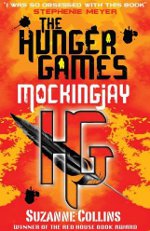 |
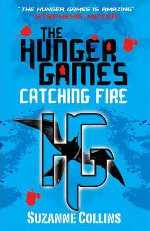
Catching Fire and Mockingjay by Suzanne Collins
The thing I’m most jealous of about the Hunger Games trilogy (aside from it making loads of money) is Collins’s talent for creating powerful symbols and visual moments. These books deal a lot with appearances, performance, even fashion, and the influence these things might have. They also do an admirable job of portraying the darkness of the world while retaining faith in humanity. I sort of wish I’d read this series in time to include it in my dissertation, as it’s a very well-crafted dystopia. |
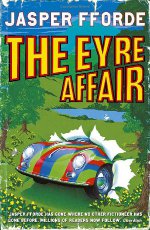 |
The Eyre Affair by Jasper Fforde
I’m not sure I have the vocabulary to talk about this book, because it’s really unique, in a wish-I’d-thought-of-that way. It’s set in an alternate version of our world, distinguished by casually deployed science fiction elements and amusing differences in its culture’s priorities. In terms of tone it veers from a Monty Python-ish blending of surrealism and satire to Terry Pratchett-esque fantasy to one of those cosy detective stories where people knit and eat Hobnobs and have names like Marmalade Jones. I won’t spoil too much, as it’s a fun rollercoaster – especially if you happen to have studied literature. Also a good antidote to Hunger Games-induced depression. |
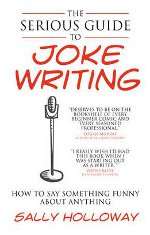 |
The Serious Guide to Joke Writing by Sally Holloway
I don’t often like books on how to write: for one thing they usually raise the childish question “If you’re so bloody good at writing, why is this the only book I’ve heard of by you?” But since I’m supposed to be writing sketches for the Beyond Studios Advent Calendar, I thought I’d better at least try to learn to be funny. We’ll see if I succeed, but regardless, I found this book a lot of fun to read. Most useful are the exercises Holloway provides which theoretically allow you to write jokes on any subject – and as she points out, however many bad jokes you come up with, you only need to use the good ones. For example, here’s one it helped me come up with: “Why is a settee called a settee? Because when you sit on it, you’re the sitter and it’s the sittee.” Okay, that one might need a bit of work… |