June-July 2012 reading

I haven’t been reading as much as I should lately, but it’s fun to write these posts, so write one I shall! (Why is it acceptable to use Yoda-style grammar in that context? And why do I, as a supposed English graduate, have no better term for it than “Yoda-style grammar”? Some questions have no answers.)
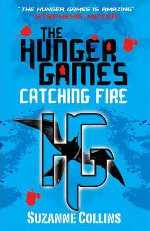
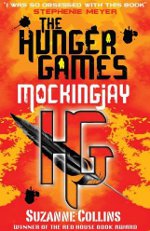
Catching Fire cover Mockingjay cover Catching Fire and Mockingjay by Suzanne Collins

The thing I’m most jealous of about the Hunger Games trilogy (aside from it making loads of money) is Collins’s talent for creating powerful symbols and visual moments. These books deal a lot with appearances, performance, even fashion, and the influence these things might have. They also do an admirable job of portraying the darkness of the world while retaining faith in humanity. I sort of wish I’d read this series in time to include it in my dissertation, as it’s a very well-crafted dystopia.

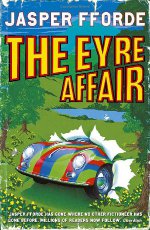
The Eyre Affair cover The Eyre Affair by Jasper Fforde

I’m not sure I have the vocabulary to talk about this book, because it’s really unique, in a wish-I’d-thought-of-that way. It’s set in an alternate version of our world, distinguished by casually deployed science fiction elements and amusing differences in its culture’s priorities. In terms of tone it veers from a Monty Python-ish blending of surrealism and satire to Terry Pratchett-esque fantasy to one of those cosy detective stories where people knit and eat Hobnobs and have names like Marmalade Jones. I won’t spoil too much, as it’s a fun rollercoaster – especially if you happen to have studied literature. Also a good antidote to Hunger Games-induced depression.

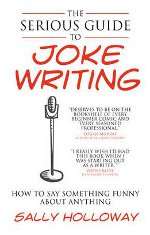
The Serious Guide to Joke Writing by Sally Holloway

I don’t often like books on how to write: for one thing they usually raise the childish question “If you’re so bloody good at writing, why is this the only book I’ve heard of by you?” But since I’m supposed to be writing sketches for the Beyond Studios Advent Calendar, I thought I’d better at least try to learn to be funny. We’ll see if I succeed, but regardless, I found this book a lot of fun to read. Most useful are the exercises Holloway provides which theoretically allow you to write jokes on any subject – and as she points out, however many bad jokes you come up with, you only need to use the good ones. For example, here’s one it helped me come up with: “Why is a settee called a settee? Because when you sit on it, you’re the sitter and it’s the sittee.” Okay, that one might need a bit of work…

So far, so Snails

I said a while ago that some day I would start working on my novel again. That day is today! Well, technically it was the 1st of July … but I’m still working on it today!

For 3 weeks now I’ve been sitting down to write from 10am-12pm, then again from 1pm-5pm. Basically I’m trying to treat Project Snails like a proper job. I know it’s not, since I’m not getting paid for it (yet), but it’s one of my ways of tricking myself into being productive. So if you hear me talk about “working” in the near future, feel free to mentally sub in a dismissive verb of your choice.

Ten things I’ve learned since starting:

1. Writing all day is perfectly possible. I have to break through a few walls of “Oh god, there’s no way I can do this”, but if I just ignore that feeling and get on with it, it works.

2. However, it does weird things to me. My perception of time goes a bit wonky – one moment time seems to be creeping along at a snail’s ™ pace, but then suddenly it’s the end of the working day and I feel like I’ve only been writing for a few minutes. I also feel a weird kind of exhausted – a slightly amusing detached kind, like I’m looking at video footage of myself falling asleep and going “Ha! He’s so tired, the buffoon.” And almost every night since I’ve started I’ve had very vivid dreams which I defy any Dream Dictionary in the world to decipher. In one, the government was providing a stripper to every house in the country for Thanksgiving (and bear in mind this dream, like my life, was set in the UK). In another, I gave an inspiring lecture on morality to two teenage pickpockets. Then there was the one about pandas leaping into the air to disarm a missile over Edinburgh … I could go on.

Big Rambly Notebook
The Big Rambly Notebook. Aaa-aaa-aaah.

3. If I’m struggling with a section, or even just one sentence or word, it helps to switch away from typing the actual novel in the Big Official Document and start scribbling notes in the Big Rambly Notebook. I might talk more about the Big Rambly Notebook in a later post, but basically it seems to be able to solve any problem if you just scribble rambly stuff in it for long enough.

4. If I’m really stuck with the novel, or just want a break from it, it helps to have something else to switch to for a while that I can still count as work – like brainstorming comedy sketch ideas for Project Ho Ho Ho!

5. Wearing a shirt makes me feel productive even when I’m not.

6. I’ve lost the will to read much, possibly because I’m so immersed in my own fictional world that popping out to visit other people’s seems tricky at best and dangerous at worst – almost like I might not be able to find my way back. It may also be because humans aren’t really designed to stare at a bunch of words all day. This makes me sad, since I was greatly enjoying my post-uni freedom to read whatever nonsense I felt like, but hopefully I’ll eventually settle into some rhythm where I can get away with reading a bit more.

7. On the days when I write less, I tend to be more confident that what I’m writing is what I should be writing. On days when I write more (I had one this week where I wrote 4,000 words), I worry that I’m getting lazy or going off in the wrong direction. My mind does love to be contrary.

8. Watching pointless videos on the internet is much more fun if you save it as a reward for yourself rather than doing it all day while soaking in a pool of self-loathing-induced tears.

9. It’s hard to think of interesting pictures to accompany blog posts about writing.

10. If I aim for something to be the best thing ever, it will usually turn out sort of okay-ish.

Brave new worlds

June was a bit of a slow reading month for me, so instead of doing another one of these posts, I’ll do a rollover June-July one later. For now, let’s talk about the film I saw on Saturday at the Edinburgh International Film Festival: Brave. I don’t want to be a Spoiling Sebastian, so I will talk about it in the same annoyingly abstract way I talk about my own projects.

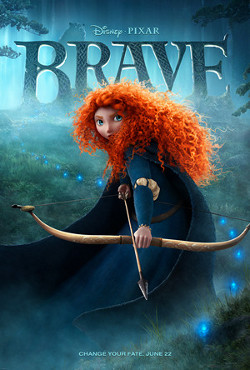
Brave poster
This poster puts me right in the mood for further devolution from the United Kingdom!
I love Pixar but I’m always slightly scared of them. Something about their style of film – superficially kid-friendly but with themes that can penetrate all the emotional defences of their adult audiences – makes me think that at some point they’re going to snap and go really dark, killing off the entire cast of a film just to make everyone cry. (If you’ve seen Toy Story 3 you might know one of the bits that made me think that.) Did they kill off the entire cast in Brave? I’m not saying.

What I am saying is I really like it. Mostly I like it because it’s an original fairytale. This is something filmy people seem to have trouble with. I don’t know if it’s down to lack of imagination or lack of faith in ideas that haven’t been doing the rounds forever, but almost all fairytale movies seem to be based off an existing tale – whether they’re trying to subvert it in some way or playing it straight. Of course this is good sometimes; our knowledge of and attachment to existing stories can mean we’re more invested in them. But isn’t it nice to take a holiday from what we know from time to time so we can explore new stories, worlds and characters?

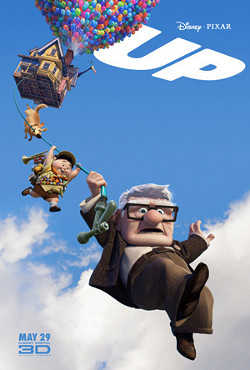
Up poster
Apart from anything else, Up is a great example of how Pixar can even do wacky talking animals in a clever and original way.
It’s not just fairytales of course; in every genre it’s a problem, particularly for movies. Sequels, prequels, remakes, reboots and reimaginings are so dominant that you could be forgiven for thinking every story that can ever exist has already been written, and they can only be rehashed in various forms with minor variations here and there.

Of course, it’s hard to write an entirely original story, but we can at least try. At least look like we’re trying, by not using the same exact characters with the same names, the same settings, the same plot devices. Try inventing some new characters, shuffling the tropes around a bit, adding a few wildcards. That’s what Brave does, and I appreciate it very much. It may not be as quirkily beautiful as Wall-E or as emotionally gut-punching as Up, but not much is.

On another note, I’ve heard vague mutterings that the SNP (Scottish National Party) are trying to position Brave as a sort of propaganda film for Scottish independence from the UK. As someone who paradoxically likes the SNP but hates nationalism in general, this seems a bit stupid. I enjoyed it a great deal as a story, and seeing so much Scottishness – even exaggerated Pixar-ified Scottishness – on a cinema screen was a fun novelty, but I don’t see how anyone could sensibly make the leap to thinking it’s indicative of some great Scottish spirit waiting to be freed, it being made by an American studio and all. I think people can tell the difference between fiction and reality.

But maybe I’m giving us too much credit, especially when it comes to Pixar films. I mean, the first ten minutes of Up. Jeezo.

Graduation

When I was 13 I dropped out of school, due to what I’ve come to interpret as a vicious circle of being bullied and being a weird child. I was home educated for a while, then did some Highers through college (though almost entirely from home). The vicious circle became less about bullying and more about finding it very hard to make friends or even meet people.

The vicious circle was already beginning to break by the time I started university, thanks to a very accepting and gradually expanding group of friends. I think acceptance may be the only thing that could have broken it. I wasn’t going to get any less weird just sitting on my own all day every day trying to write fantasy novels.

But in terms of structure and sense of forward progression through life, going to university was an important and scary step for me. I hadn’t attended an educational institution regularly since my two sporadic years at high school, which had been a horrible depressing nightmare. I honestly had no idea if I would make it through the first week of uni without having one of my old panic attacks and fleeing out the door never to return.

I graduated on Wednesday. (Thanks to my mum and brother for the following photos.)

Me standing with some people.
Me shaking hands with a man.
Me in front of a castle with a bit of paper.

The whole experience was incredibly challenging and yet reassuring. Not only did I somehow manage to fool some more nice people into being friends with me, I was able to function well enough to write essays on time, attend almost all my classes, pass exams and eventually graduate with a First Class Honours Degree. Not exactly walking on the moon, but just a few years back I would never have thought this possible.

Forgive me for building such a simplistic narrative around these cherry-picked events from my life. Not everything has changed. I’m still not exactly confident. I’m still jobless and living with my parents. I’m not much fun at parties. But progress seems possible now.

It’d be nice to think that some other insecure person might read this blog post and take some sort of lesson from it. But that’s assuming a lot, and I’m suspicious of those who dish out advice indiscriminately as if people are all the same. In truth I’m not sure there’s any broader lesson here than, if you’re me and it’s 2008, you should go to Napier and study English. Well, I guess that’s something.

If you’re me and it’s 2008, you should go to Napier and study English. Trust me on this.

Festive funsies / We’re all going to die

Quick update on Project Ho Ho Ho, the silly video advent calendar I talked about a while ago.

We’ve already had more contributions than I was afraid we might – we’re on $1,311 as I write this. But unless we get some major new momentum going in the 3 weeks we have left, we’re not gonna reach our target of $4,000.

This doesn’t matter on Indiegogo as much as it would on Kickstarter, as we still get the money we raise even if we fall short of our target; Indiegogo just takes a bigger cut for itself. Still, it would be nice to get there. If anyone reading this wants to chip in or share the project with others using their preferred medium of interaction, all us Beyonders would be most grateful.

What I really want to mention, though, are the video updates we’ve been doing. In particular, the one below. (It’ll make more sense if you’ve already watched the main campaign video here.)

[youtube http://www.youtube.com/watch?v=kwZrkpfH8Gg?rel=0&w=560&h=315]

I’m mostly posting it here because I’m worried all the links posted to it on Facebook, Twitter, etc. will quickly get buried, whereas this blog feels a little more permanent. (Not sure what makes me think that, but I do.) And I’m quite proud of it, so I don’t want it to just disappear.

It was basically made by three people. Me, who wrote it, and held the microphone during filming. Lynn, who acted in it and brought it exactly the kind of intensity it needed. And Gavin, who gets the credit for pretty much everything else about it, including the swirling HUD elements, gunshots and wavy tentacles. Oh, and the giant octopus laser pigeons were his idea.

The day we shot it was fun, but since I’m much better at talking about pain and strife than about fun, I’ll focus on the writing. Basically, we (the advent team) were trying to think up ideas for updates, little nuggets of video we could release at intervals to encourage people to give, or at least give us an excuse to further badger our Facebook friends for money. (If you’re interested, here is another example, with me dressed as a woman.)

Since this campaign sort of depends on convincing people we’re funny, the emphasis in these updates was supposed to be on comedy. But I have trouble with comedy. “We’ve noticed!” you heckle. “I… um… shut up,” is my cutting put-down. Trying to write a pure comedy script is, to me, like trying to row a boat using only one oar: technically possible, I guess, but only to someone more talented than me. Same goes for pure drama – what is life without humour? I can’t seem to be entirely silly or entirely serious. They’re two sides of the same coin, totally dependent on each other. In my view, there’s nothing that can’t be joked about, because joking about something doesn’t necessarily imply that it’s not serious or that you don’t care about it. Likewise, I can’t turn the serious side of my brain off even when thinking about the silliest or most trivial subjects. Put simply, I’m not a very versatile writer.

So I came up with the message from the future idea as a way to combine silliness and seriousness: an update treating something inherently ridiculous and trivial – the Advent Calendar – as if it were the most important, profound and life-changing thing in the world. When you watch Lynn’s performance, it’s actually pretty dramatic – it’s only when she reminds you of the utterly ridiculous context, as she does at points throughout the video, that it becomes funny.

Of course, it’s also a parody of various tropes from popular culture – post-apocalyptic survival, time travel, earnest monologues to camera. Some of this was probably because I’d been watching too much Battlestar Galactica, though I did ultimately resist putting in a nerd-pandering line about frakking toasters. Parodies are another way of being funny without just being funny; they can be fairly dramatic scenes in the style of some genre or specific text, but with one subversive element thrown in that makes the whole thing absurd.

Now I’m thinking up sketch ideas for the actual advent calendar, and my favourite idea so far – while it will hopefully be funny – is also quite philosophical and potentially melancholic, to the point that I’ve actually felt kinda haunted since I came up with it. But I also have an idea that’s about someone sitting on a toilet so, y’know, it all balances out.

May 2012 reading

I like reading! To prove it, here’s some spraff about the books I’ve read this month:

The Man Who Mistook His Wife for a Hat by Oliver Sacks

I’d heard Oliver Sacks on Radiolab (a great podcast about science and brains and stuff – if you haven’t heard it it’s like having liquid epiphanies poured into your ears), and decided to get this book as part of my vague plan to dig a little deeper into things that interest me. The book recounts a bunch of cases involving people’s brains behaving in unusual ways – failing to process sensory data properly, rejecting the memories of events minutes after they happen, even granting their owners the ability to do seemingly impossible things like instantly identify whether massive numbers are primes or not. It’s accessible and fascinating, and makes you think about how much we take for granted, but also how much of that can be taken away while still leaving something to live for.

World War Z by Max Brooks

Zombie fiction is kinda strange. From my limited exposure to it, I get the sense that works like The Walking Dead, Shaun of the Dead, Left 4 Dead and other things ending in Dead are not just about a zombie epidemic – they’re about the zombie epidemic. It’s like we’ve all agreed it’s going to happen at some point, and a bunch of people are writing stories that slot right into it: historical fiction for a made-up history. This book provides a seemingly exhaustive collection of well-thought-out personal and political stories that span the globe. I really hope that in the film adaptation, the protagonist is still humanity as a whole – that would be a lot more interesting than one handsome white American battling his way through zombies to reunite with his family.

House of Leaves by Mark Z. Danielewski

It’s immediately obvious to those of us who like to flick through books before reading them to get the lay of the land that this is an unusual book. So I approached it like Clarice approaching Hannibal Lecter, knowing it was going to try to screw with my mind. It’s just a bunch of words on pages, I told myself! Then I got to page 26 and decided “Okay, this can be my daytime book”. Despite the fact that it’s undeniably inventive and creepy, I’m not totally sure I like House of Leaves. This may be down to unfortunate timing: certain passages felt like a slog as they reminded me a little too much of reading impenetrably endless theory for my recently finished English degree. But if you’re patient and like weird things, this is certainly one of those.

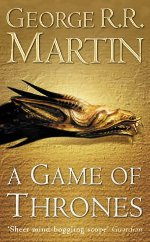
A Game of Thrones by George R. R. Martin

I love fantasy. I don’t quite know why. It can take a little effort even to work out what’s fantasy about A Game of Thrones (a lot of the usual “fantasy” elements are confined to old stories and vague superstitions in Martin’s world), but for some reason the mere fact that it’s set in a history other than our own makes it massively more appealing to me. Already I feel bad that I know and care more about the power struggle between the Starks, Lannisters, Targaryens, Baratheons etc. than about most of real history. This book weaves together short, to-the-point sentences (which I could stand to learn from) into an intricate tapestry that’s consistently unpredictable and exciting. If you like the TV show and are wondering if it’s worth reading the book, my answer is an emphatic yep. If I gave out MoleThrower Book of the Month awards, this would win the one for May 2012. But I don’t, so it can’t. Sorry George. Ah, he’ll get over it.

Re-thing-ing Project Mirror

Lately I’ve been subjecting Project Mirror to a process that can best be described as “re-thing-ing”. Okay, maybe it can be described a little better than that.

Mirror began as a very vague idea for a short musical film, which I developed into an actual plot while on holiday in France in the summer of 2010. Through my usual process of overambitiousification, this turned into a script that would probably take up an hour of screen time and be insanely difficult to make, due to it requiring: several acceptably photogenic and talented actors/singers, numerous hard-to-find locations, a multitude of elaborate props and costumes, a bunch of special effects, at least a handful of musicians, and a Herculean effort on the part of more people than I actually knew. I could tell this was happening as I was writing and rewriting it, but at the same time I was becoming so obsessed with the story and its characters that I didn’t want to be brought back down to earth by practical concerns.

So this script has been sitting there for a while doing nothing, and looking like it’s going to keep doing nothing for the foreseeable future. Rather than accepting this as a well-adjusted person might (though a well-adjusted person wouldn’t have written this particular script in the first place), I’ve been thinking it over and over. While studying a certain text for university earlier this year, I suddenly had an idea for a way to adapt it into something relatively easy to make. All I’ll say is that it’s more or less a radio play, but with a few stylistic twists.

Vague, I know. But the process of adaptation is interesting and quite liberating. Reading the first Song of Ice and Fire book recently, I’ve been trying to vaguely reverse engineer how it was adapted for TV. While the show seems fairly faithful overall, it’s interesting to see little bits and pieces of story and dialogue lifted from one place to another, sometimes (in my opinion) more effectively positioned in the show, sometimes in the book. It drives home the idea that there is no one right way to tell a story, and that adaptation can often reveal hidden potential for dramatic moments that would otherwise have lain dormant, or at least underplayed, in the original text.

The trouble with adaptation – or any kind of rewriting, in my experience – is that it’s tempting to just copy and paste whole chunks into your new draft. When I do major rewrites on Project Snails (as I am beginning to again now), I force myself to type everything again, so I don’t end up just copying and pasting the whole document and going “Yay, I did another rewrite!” In a sense, accepting that Mirror can’t be made into a film right now is a good opportunity – in the same way, I suppose, that getting fired might be. Thinking a creative project over from a new angle is rarely a bad thing, and no rewrite should ever make things worse, as long as you’re paying attention.

But is re-thing-ing the project from a film thing into an audio thing a compromise? In some sense, of course, but at the moment it doesn’t feel like one. Possibly because I don’t have a very visual mind, so I never saw the visuals in my head anyway. And because in making the audio version we’ll have to compromise considerably less than we would in making the film version. Locations, props, costumes and special effects are instantly removed from the equation, the recording time and cost of equipment needed are drastically reduced, and the actors can be as hideously ugly as they like as long as they have nice voices.

Another benefit of doing it as an audio thing – over making an embarrassingly low budget film version – is this doesn’t really diminish the possibility of remaking the story as a film at a later date. If, that is, the audio thing turns out to be universally accepted as the best thing in the world ever, as in my more deluded moments I’m sure it will be. 😉

20:01

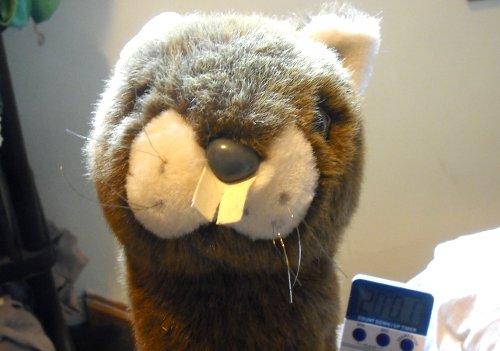
My week’s been pretty productive so far. As much as I’d like to give myself some credit, I think it’s mostly down to this thing:

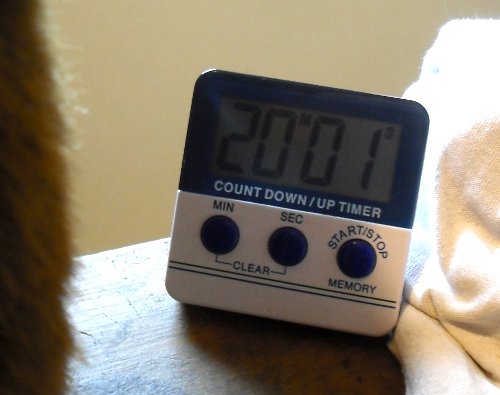
No wait, the framing of that picture might have been misleading. I meant this:

Let me explain. (The second picture, I mean, don’t ask me to explain the first one.) In one of my infrequent attempts to find a reliable way to trick my brain into being productive, I’ve been using this timer, which counts down from 20 minutes and 1 second and then goes be-be-be-beep, be-be-be-beep until you reset it. I think of a task to do – this used to be reading books for university, but this week it’s mostly been working on mixes for Project Bubble – start the timer, and focus solely on that task until the sudden beeping snaps me out of it. But by that time, I’m often so involved in the task at hand that I keep going for longer.

I think this is necessary because I never think I want to do anything useful or enriching, basically anything that requires any commitment whatsoever. Even playing a game or reading a book sometimes seems like too much effort. When I do make the little effort required to get started on something worthwhile or genuinely enjoyable, I almost always find it’s worth it. But the supremely lazy and cynical me that’s in charge a lot of the time is happy to fritter away hours, days, just clicking through his bookmarks bar in a depressing cycle, waiting for something to change in the online world, something that will motivate him to get his behind in gear and get out there and do something amazing!! It never does…

What this timer does is let me know “Okay, you only have to do this for 20 minutes and 1 second, then you can feel good about yourself and go back to your boring and mildly self-destructive ways”. Because there’s a definite end in sight, not too far away, it’s not too intimidating to start a task. Whatever I’m doing, I get a sense of achievement when the beeper goes off, which, however hollow, seems to be psychologically important to me.

I can’t remember if I read this exact idea somewhere, but I remember hearing that your brain can only concentrate on something for 20 minutes. This sounds suspiciously like one of those made-up pop psychology facts, but somehow 20 minutes has become an important length of time in my head. Unlike with 30 minutes, you can comfortably fit two of them into an hour, including all the faffing around, cycling through websites, working out what to do next, sitting down in the right place with the right stuff, etc. that inevitably happens in between. (The extra second is to compensate for the time it takes me to remove my finger from the “start/stop” button on the timer and begin my task. Sadly, I didn’t add it on just to make myself seem strange. That takes no embellishment.)

This has been pretty successful this week. Five out of six of the mixes for Project Bubble are in a good place. (The other one doesn’t exist yet, but let’s not think about that!) Who knows how long this method will continue to work, but no doubt I’ll come up with another productivity experiment once the novelty wears off this one. Maybe some day I’ll find one that works indefinitely! When that happens, I’ll either tell you about it or take over the world. We’ll see.

Let’s get Meta

A very meta image

Considering how long I’ve spent writing some of these posts when I should have been working on other projects, I should probably add a new project to my list: this blog, aka Project Meta. I should also stop overthinking every word I write here. In fact, I’m going to misspell a word right nwo – and not correct it – just to get me in the habit of blogging more spontaneously.

Oh, who am I kidding? I’m only okay with that because I know it was deliberate. Everything I write here should be taken with a pinch of salt. It’s all planned in advance and rewritten multiple times, even the stuff that’s… oh, I don’t know… designed to sound spontaneous, even this bit here where I’m admitting that it’s all planned in advance and rewritten multiple times.

This stems not just from university, but from the desire to make myself seem interesting, because when trying to converse in real life I can barely think fast enough to construct coherent sentences, let alone say anything insightful. When I have the time to think through what I’m about to say, I naturally want to make use of it.

But I want to try editing myself a little less, for some posts at least, because editing can come at the cost of honesty. On reflection, the last two posts on Project Snails seem a tad overdramatic – which is okay for Snails because that’s something I’m really very passionate about, but if I start writing epic screeds like that about every little aspect of my life and creative pursuits, things will get ridiculous fast. I need to be honest, unafraid to acknowledge that in general my life is pretty mundane. For example, I recently tried the breakfast cereal Krave for the first time. It was okay. I might have it again soon. See? This is better already, right?

I don’t want to promise anything about the future direction of this blog, because one rule of the internet is that if you see a page with “New website coming soon!” on it in flashing text, you’ll then discover it was last updated in 1998. Saying you’re going to do things is often an agreeably easy substitute for actually doing them – which, come to think of it, is another reason I should probably spend less time writing these posts.

But I will keep writing them. Some of them may be in a more rambly, stream-of-consciousness style (I used to do this in my journal before university made me overthink everything), but I’ll try to write more thoughtful ones occasionally. I’m working mostly on Project Bubble this week, and if I have time I’ll say some more about that. And don’t worry, I plan for it to be entirely spontaneous!

Consumed by Snails – part two

Returning to Project Snails after four years apart from it is a strange experience. In some ways it feels like returning to one of those other lives we have, in different places with different people, that we occasionally switch between. Time doesn’t seem to have passed, and the life I was living without the novel – as recently as two weeks ago – seems like a dream. “What was that about?” asks my novel, and all I can do is smile self-deprecatingly and shrug. “University? You do do the strangest things sometimes, Alex. Heh! Do-do.” My novel isn’t very mature, you see.

In other ways, though, the passage of time – and, I’d like to think, some small amount of growing up on my part – becomes apparent when I read my past self’s writing. Happily, I seem to have gained at least some of the perspective that I hoped four years, and higher learning, would bring. Or academia has stifled my unique voice and snuffed out my creativity, leaving me tragically blind to my earlier genius. Either way, I can see flaws all over Snails.

There are passages that are clearly more about me being “clever” than about the story or the characters. Analogies are stretched to snapping point as past me tries to force in as many tenuous connections as possible between the literal and the metaphorical. Descriptions and dialogue that could comfortably be simple and straightforward are written in strange, roundabout ways just for the sake of it. There are bits where I as the author am the only person who could hope to guess what a character is really thinking. Some of the “emotional” scenes make me cringe, which generally isn’t the intended effect. There are blatant continuity errors, including character and place names changing from one chapter/sentence to the next. And there is a bit of unexplained weirdness surrounding certain subplots, which I was laying in there for the potential second novel, but which probably hurts the first novel more than is justified, considering it may well be the only novel.

But despite all this, I can’t help feeling there’s something there. Over the years I worked on it, characters developed and rebelled against their original one-dimensional selves, the world was infused with a fair amount of detail and history, and the story became intricate and multi-layered, with themes and subplots woven through it just subtly enough not to distract from the core story. All this work, taking place over multiple, evolving plans and drafts of the novel but now compressed into one draft, reminds me of why I should probably have some faith in my past self: there’s a lot more of him than there is of me.

The trouble is, as much as I love the characters, the world and the story, the writing just doesn’t live up to them.

That’s why I’m afraid of this book. It’s almost hypnotic. I can see the potential in what I have, but I know it’s going to take an insane amount of work to truly realise it. And not just work. It’ll take the sort of emotional investment that I haven’t made in anything for a long time. I’m going to have to think about parts of it until my brain goes numb, then force myself to un-numb it and carry on thinking. I’m going to have to wake up in the night again, terrified that that character’s storyline isn’t believable enough, or that this plot point doesn’t make sense since I changed that other thing. This stuff isn’t optional. Not if I want the novel to be as good as it can possibly be.

I’d forgotten all this. I was in denial for much of my time at university, thinking “These smaller projects are fun, maybe I don’t need to go back to my novel”. Now I realise how wrong I was. I was always going to have to go back, for better or worse. If I don’t, I’ll forever be wondering how it would have turned out. Maybe it’s still just a 12-year-old’s naïve fantasy. But I have to know.

So I’m going to rewrite Project Snails. I’m not going to plunge in straight away, as I’d like to get some of my smaller projects done, or at least further along, before I make it my main focus. But at some point, I feel sure, it’s going to consume me again. I just hope it gets all the nutrients it needs from me to grow into something special, and that I’m still vaguely alive when it spits me out.

See, there’s one of those overstretched analogies I was talking about! Better make sure I edit my novel better than I edit this blog.