New year’s blues

Warning: self-pity ahead! But also a lovely flower. So … it balances out, right?

January is definitely in the running for my least favourite month of the twelve. This is odd, since it comes after the always-stressful December, and many people treat it as a welcome chance to finally relax a bit and/or make a fresh start, pretending all the mistakes they made last year don’t count because the last digit of the year has ticked around. But I’ve found it rarely works that way for me. Instead I end up unable to shake off December’s exhaustion, while at the same time yearning for the sense of purpose and excitement I had in the lead-up to Christmas. So I slump around for a while, unable to muster up the motivation to do anything useful, until shame gets all up in my face and forces me to make a set of late resolutions and get myself semi-organised for a while.

This year (well, last year, I suppose) I thought up a way to transform this post-new-year slump into a more exciting and invigorating time: I promised all the people closest to me that I would give them my novel on the 1st of January. For context, this is the novel I’ve written about here before under the codename Project Snails, the massive fantasy novel I’ve been working on for – yep, I think it’s officially been more than half my life now.

So that happened. I half expected it not to. I’d been pushing back the deadline for the handover for a long time, and until recently I couldn’t imagine living in a world where people other than me had access to the stories and places and characters in my head. But now a select few other people have seen that stuff – they’ve experienced the stories, met the characters, frolicked through the places I created. Some have even finished the novel and given me feedback. None of this process turned out to be as scary as I’d expected. I’d expected to be so terrified at the prospect of people reading my precious words that I would run away screaming the moment any of them tried to bring it up in conversation. But in the end it all felt a bit low-key. Pleasant, but low-key – as I should have expected from my pleasant, low-key family and friends.

I don’t know what massive changes I was expecting in my life upon showing the novel to other people. I suppose the most delusional part of me thought that maybe my family and friends would be so hypnotised by mere contact with such a masterpiece that they’d take it upon themselves to break down the doors of every major publisher in the land, demanding that it be read, and after the first page the publishers’ eyes would light up and they would say “Wow, this is amazing – totally fresh and unique! Not even remotely a rip-off of Terry Pratchett or Philip Pullman or George R. R. Martin! This must be read by the world! We’ll publish in every known language, from Klingon to Welsh! And by the way, I also own HBO, do you mind if we make a series out of this?”

But really it’s not a sense of anticlimax that’s got to me. It’s the fact that the thing I’ve been pouring myself into for years is – well, not quite finished, since I still have to do some rewrites based on feedback, but – it’s out there. It’s no longer in my head. It’s no longer my big secret, the thing that made me different from other people, the double life that made me feel somewhat special, special enough not to mind that my actual, single life, measured against other people’s, is something of a disaster. What I’ve been doing throughout most of my adult years (with the possible exception of my time at university) is the equivalent of carrying armfuls of chips (the casino kind – I haven’t quite lost my mind that much yet) to a roulette table and stacking them all on red, awaiting a single spin that will take place at some ill-defined point in the future. Thanks to this singular and risky focus, I have no real employable skills. Or any other kind of skills, really – social skills being a key example.

This is all getting a bit depressing, isn't it? Here's a picture of a flower to make up for it.
Is this getting too self-pitying now? Okay, here’s that lovely flower I promised.

All I have is this novel. And I’ve been quite openly fooling myself into believing that that’s all I need, that all the other ingredients for a full and happy life will spring forth from it some day. “Hmm, I feel crushingly lonely today. Should I take some risks and go out and try to meet new people? Nooo, that’s scary and I’m rubbish at it, and besides, when I get my book published I’ll get to meet lots of new people, and they’ll be so impressed by my writing skill that they’ll want to be friends with me straight away, and I won’t end up getting rejected.” I’m aware that this isn’t how relationships work, but if I’m honest with myself, it’s the sort of twisted logic that’s been behind a lot of my decision-making over the past ten years.

Since new year’s day, my mind has had little to do other than reflect on all this. (Can you tell?) And that has led me into one of the deepest depressions of my life. I’m questioning everything, primarily my writing skill, upon which a large chunk of “everything” directly depends. I don’t know if my first proper novel is any good, and if it is I don’t know if I’m capable of writing anything that good ever again. I’ve been trying to come up with an idea for a short novel to churn out in the next few months to reassure myself, but rather than reassuring me this process has only deepened my depression, as I run up against various walls – mostly an alarming lack of life experience which prevents me from having anything meaningful to say about the majority of potential subjects. I’m still trying to come up with something that really sparks my interest, but trying to spark your interest when you’re depressed is like trying to light a campfire built with damp wood.

It’s February now, and it’s dispiriting that the gloom has lasted so far into the new year. Today was particularly bad, in a crying on the bathroom floor sort of way. I’m grateful to say my depression very rarely gets as extreme as that, and I’m already feeling significantly better (partly for having written this post). Hopefully today was just an odd anomaly rather than a harbinger of my mind’s future trajectory as all the dreams are stripped away and I see the reality of where I am. If reality always feels like today, I’d rather find a way to sustain the dreams. It can’t be that hard – after all, I’ve been doing it for most of my life.

—

Despite the fact that this post was mostly written for my own benefit, I will say to anyone else who may have made it this far … I hope, if you have the new year’s blues, or any other kind of blues, that they clear up soon. Everyone deserves to be happy, so if you have any choice in the matter, let yourself. Thanks for reading.
August-October 2013 reading

A Study in Scarlet A Study in Scarlet by Arthur Conan Doyle

I had read this already, but happily revisited it for the book club my friends just started. It is a good read, and a great introduction to the character of Sherlock Holmes, though if you’re used to more modern mysteries it may flummox you just because it breaks some of the rules that would later be established in the genre – for example, certain elements that would be crucial to untangling the mystery aren’t introduced until quite late in the book. But the nicely detailed and methodical description of the crime scene lets us feel as though we could work it all out if only we were as clever as Holmes, and the solution, when it comes, is elegant and satisfying. Compared to that of other books from the same period, the language is extremely accessible, and the series is definitely worth reading if you like the modern BBC adaptation of Sherlock, especially since the first episode of that kinda misses the point of the method of murder in this book.

Among Others Among Others by Jo Walton

Often I’m annoyed by fantasy stories that give us the option of believing all their impossible events take place only in one young character’s head – the sideways wink, that cheeky “oh, kids and their imaginations” thrown into children’s films as if the children watching aren’t going to notice. And even though this book is told in the form of a socially alienated 15-year-old’s diary, I didn’t really find myself suspecting that the fairies and magical events she describes were anything but real. Perhaps it’s because the way magic works is original and ingenious and beautifully integrated into the world – or perhaps it’s because the narrator is clever and likeable and odd in some very relatable ways, and I wanted to trust her. Also, along the way, she talks about a wide array of science fiction and fantasy books which, a little like the bibliography of 80s geekdom scattered throughout Ready Player One, might help people like me, who sometimes feel a bit out of the geek loop, to catch up.

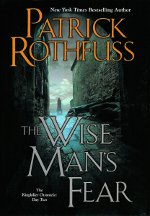
The Wise Man's Fear The Wise Man’s Fear by Patrick Rothfuss

Rather than starting with a bang, this book eases us back into Kvothe’s world quite slowly, but that’s okay. Aside from his wise and charismatic style and his brilliant world-building, much of Rothfuss’s skill is in wrapping us up in the day-to-day details of his protagonist’s life – stressing us out with his troubles, making us cheer whenever he wins some small victory over circumstance – until the fact that we’re not actually him seems entirely irrelevant. In that, it reminds me of nothing so much as Harry Potter. And the slow build-up more than pays off, as the latter half of the book is jam-packed with stunning imagery and moments to make you gasp out loud and prickle with goosebumps. If the third in the series lives up to the first two, The Kingkiller Chronicle will definitely join Harry Potter and His Dark Materials on the list of stories I go back to when I want to be taken on a fantastic journey away from my worldly troubles. Whatever it says about me, stories like these are among my favourite things.

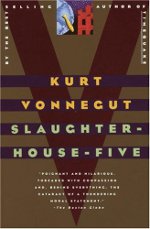
Slaughterhouse Five Slaughterhouse-Five by Kurt Vonnegut

Vonnegut certainly does know his way around a weird sentence – I learned that much from Sirens of Titan. But in other ways, Sirens didn’t prepare me for this book. Rather than being a funny, occasionally melancholic philosophical romp, Slaughterhouse-Five is tight and sharp and crisp and deranged and brutal – merciless in its quest to hammer home the horrors of life in general and war in particular, chilling in its amused detachment from these horrors. But it wouldn’t be half as powerful without this detachment. Rather than moralising, it peppers us with short little bullets of humour and horror, and after a while it becomes disturbingly hard to tell which is which. Don’t read it unless you’re in the mood to think about death for a while. But you probably should read it at some point.

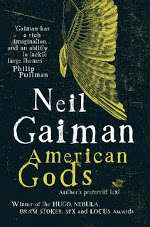
American Gods American Gods by Neil Gaiman

I’m pretty sure I’m a person who should have been reading Neil Gaiman for years, but somehow I’ve only just got round to him. He’s one of those writers who crams an intimidating number of ideas into a small space, casually glancing off concepts which in other hands would be whole books of their own. American Gods is a weird one, though. I certainly enjoyed the American part – the slightly unsettling small towns, the tacky tourist attractions, the road movie flavour of it all. But I found the Gods part a bit baffling, to be honest. Almost every character speaks in riddles, and even the appropriately named shadowy protagonist doesn’t often stop to question the barrage of barely explained insanity that confronts him at every turn. The ending, especially, gets a bit metaphorical for my tastes, as physical reality fades into the background and people do all sorts of very symbolic-seeming things for no clear reason (don’t ask me why I let Murakami get away with it). Maybe I don’t know enough mythology to untangle it all, or maybe this book is just for people cleverer than me. I’m happy to confirm that Neil Gaiman is definitely one of those people.

April-July 2013 reading

More ramblings about books! A few more than usual this time, but that’s because most were quite short and a bit on the pulpy side. Sorry English degree – I’ll try to read something big and literary soon, I promise!

The Wasp Factory The Wasp Factory by Iain Banks

Be warned, this is the sort of book they’d make you read in high school, and if you’re me you wouldn’t get it at all because it didn’t intersect much with your naive little world – one of those books where everything is almost comically effed up and depressing, and everyone plays their part in a cycle of cruelty, weakness and appallingly bad parenting. But now, as a sort-of adult, I appreciate it more. The most impressive thing is perhaps that it makes the psychotic, misogynistic, animal-torturing protagonist more comprehensible to us than the apathetic world around him. Stick around for: a final chapter that could serve as the subject of a million essays featuring the word “problematic”, and a brilliantly unpleasant account of being drunk.

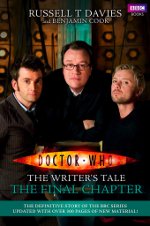
The Writer's Tale Doctor Who: The Writer’s Tale: The Final Chapter by Russell T Davies and Benjamin Cook

Now, don’t get me wrong, I love the Steven Moffat era of Doctor Who more than I love myself – quite a lot more, in fact – but I still think Russell T Davies was quite underappreciated by fans. Not only was it his passion that revived the show back in 2005, he established a level of quality that was by no means assured before that point, but which people almost immediately began to take for granted. This book, through a series of informal and brutally honest letters, documents his writing process during his last couple of years as showrunner, and for aspiring writers it’s funny, familiar, terrifying and reassuring all at the same time. It certainly makes me feel better about my own procrastination, although on balance I suppose that might not be a good thing.

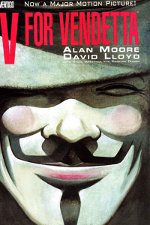
V For Vendetta V For Vendetta by Alan Moore and David Lloyd

I’ve never read enough comics to fully adapt to them, so I tend to find them disconcerting and hard to follow. To try and fix this, I thought I’d try something I’d already seen the film of, and which also happens to be in one of my favourite genres. Like many dystopian visions, V For Vendetta shares a lot with Nineteen Eighty-Four, though being newer it is more creepily tuned in to the specifics of modern Britain. The characters are largely caricatures who play out clashes between ideologies: fascism, anarchy, justice, chaos, etc. It’s also deeply intertextual – it plays with quotations and scraps of philosophy, and is already making its own mark on the world. I really enjoyed it – it makes me want to read more comics, and just read more in general so I can appreciate its references. I did like the Faraway Tree stuff though. See, there’s something for all mental ages here!

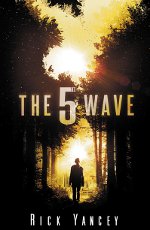
The 5th Wave The 5th Wave by Rick Yancey

I was unsure about this book from the first few chapters, as me and the main protagonist got off on the wrong foot, and sadly our relationship never fully recovered. The setting is ridiculously bleak, existing at some dark intersection between The War of the Worlds, The Walking Dead, and everyone you ever loved dying horribly. The story, meanwhile, is a cocktail of various Young Adult flavours, notably The Hunger Games (as the teenage protagonist stumbles from one gritty, back-to-basics survival situation to the next), and Twilight (as she gets all gooey over a mysterious but hot guy who may or may not want to kill her – has the whole of society just decided that that’s how love works now?). The story does have some moments of real cleverness, but they weren’t quite enough to hold my interest. Anyway, I won’t try to pass off my distaste as some sort of insight; it just didn’t really click for me.

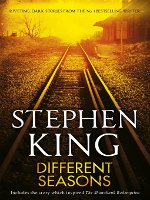
Different Seasons Different Seasons by Stephen King

Stephen King feels like a storyteller who always knows what he’s doing, in a way that confounds and intimidates me greatly. All the stories in this collection of four are fascinating – they aren’t really classed as horror stories, but there is certainly something to horrify in each one of them. ‘The Body’ was the highlight for me: it explores the connections between childhood and adulthood, and the distinct strangeness of both worlds. The adventure the main four characters go on very much captures the odd mixture of images, both nostalgic and disturbing, that come with memories of childhood – it’s kinda like the prose equivalent of Boards of Canada’s Music Has The Right To Children. The story that was adapted into The Shawshank Redemption is another highlight, and a masterclass in character building to which I’m sure I will return frequently.

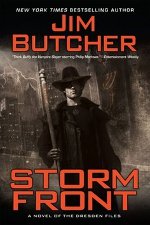
Storm Front Storm Front by Jim Butcher

One of those troubling books where the author was younger than me when he wrote it. I was constantly on the lookout for clues to this fact to make myself feel better, but sadly this is a very well structured and enjoyable urban fantasy detective noir thriller thingy. It grips you through the old technique of piling problems upon problems, never resolving one without introducing two more. Poor old yer-a-wizard-Harry Dresden is never allowed a pause for breath without being bludgeoned with a blunt object or attacked by a demon or pounced upon by one of the book’s many femme fatales, so the pace is always fast and pleasingly silly. And you can feel the author setting up a world fit for the many sequels the book already has – it’s one of those series that it’s nice to know is there in case I need something pulpy and fun to binge on.

Ready Player One Ready Player One by Ernest Cline

A book about escaping from a ruined world into a virtual easter-egg hunt created by an eccentric dead billionaire obsessed with 80s geek culture … and if that sounds like the ultimate piece of escapism for nerds, that’s because it pretty much is. But as much as that description appeals to me, it still feels like it does a disservice to the tight structure and vivid imagination of this book. There’s a real sense of adventure here, of danger, wonder and magic – a tone somewhere between Charlie and the Chocolate Factory and The Hunger Games, if that makes any sense at all, which it really doesn’t seem to when I put it like that. Trust me, it’s great. And it’s such a massively joyful and unapologetic celebration of geek culture that even I, as someone who often feels too weird and awkward to even be a proper part of the geek community, was practically hyperventilating at certain points. In a good way.

(Oh yeah, I also read Reunited in Death and A Reformed Character, the second and third books in the Pitkirtly series by Cecilia Peartree, but as the author’s son I don’t really feel qualified to write critically about them. But in my biased opinion, they are good and funny and you should read them.)

Diiiieeee…t

I’ve been overweight for as long as I can remember. Like most traits that are with you from early childhood, it felt inherent to me and I didn’t think about it. I didn’t really think much about myself as a person at all, but that’s a story for a much longer and stranger blog post. So I was into my 20s before I even thought about trying to change.

In early 2010, after some highly unscientific and often medically inadvisable attempts at losing weight, I finally decided to try a more sensible route and signed up to the online version of Weight Watchers. I followed their plan to the letter, adding up the points information for everything I ate and refusing to go over my daily allowance. Over the course of the year I lost 6 stone, also known as 38 kg or 84 lb. I still wasn’t quite at my target weight, but I was tantalisingly close. I felt healthier than I think I’d ever felt before, and I even started to feel a bit more confident in myself.

Not like my life
Not like my life
Then Weight Watchers made the switch to the new ProPoints system. This was enough to upset the rhythm I had fallen into. Enough, at least, that I got lazy and didn’t bother counting points for a few days.

If this had been an episode of a heartwarming teen sitcom I would have been too scared to look at the scales at my next weigh-in, so I would have made one of my witty and attractive friends look at them instead, and they would have gasped “I can’t believe it” and I would have said “Oh god, how much have I gained” and they would have said “You’ve LOST 2 pounds” and we would have hugged and I would have learned that it was never Weight Watchers that was making me lose weight – it was me all along.

Like my life
Like my life
But if my life is any sort of sitcom it’s one of those modern, slightly depressing ones with Ricky Gervais and without a laugh track, so that didn’t happen. In real life, I (ironically) didn’t have the guts to weigh myself that week, or for several weeks after. And the only lesson I learned was that the system I had been forcing myself to live by for the better part of the year was in fact optional! The need to point everything I ate was just a lie I had been telling myself! If I felt like eating a teensy bit more than my points allowance, er, allowed, I could do so, and the world would not explode!

This dangerous knowledge sent my weight spiralling back upwards like a confused young muggle-born wizard on a helter skelter. In classic pre-2010 Alex style I persisted in eating way too much on a regular basis, each time clinging to some Zeno’s paradox-esque notion that no one mouthful of food can ever be the one that sends you over the edge into morbid obesity. I rediscovered over-eating with all its highs (yay, I get to eat this whole massive bag of sour Skittles!) and lows (aw no, I just ate that whole massive bag of sour Skittles).

Since then I’ve been trying absolutely everything I can think of to get back on the diet and stay on it, but the longest this has lasted is a couple of months. This puts me in the uniquely annoying position of envying the Alex I was in late 2010, an Alex who felt relatively happy about himself, who could go outside in summer without immediately sweating from every conceivable corner of his body, who received the occasional compliment, who actually had days of feeling slightly like a real person.

Sour Skittles
My 19 ProPoint nemesis
The problem now, and it’s a rather clichéd one I’m afraid, is that I feel as if I’m not the same person from one day to the next. One of me can be as determined as he likes that he’s not going to exceed his points allowance, but that does nothing to stop another, less disciplined me from coming along a few days later and ruining it. And once one day is ruined, my motivation drains away and it takes a while to find that determined side again.

Of course, this is all just a poor excuse for my lack of discipline. Here’s another one: judging from my family history I probably have a tendency towards addiction encoded into my genes. I’ve mostly dealt with this by never trying anything I might end up addicted to. But sadly that isn’t really an option with food. I’m sure dealing with a drug addiction is much more serious and harrowing than what I’m talking about, but it has one simplifying factor: in most cases there is the option, however hard, of cutting yourself off entirely from your drug of choice.

But if you have an eating problem (I won’t say disorder, as I don’t want to trivialise other people’s more life-threatening problems), guess what? No matter where you go, you’re going to be constantly surrounded by food. And – double guess what? You need to have some of it in order to survive. And generally, no one’s going to tell you when to stop eating. You have to decide on your own, based on numerous factors such as: 1) mmm, this is delicious, 2) eating it feels so great, 3) I have nothing much else to feel great about right now, 4) just a few more mouthfuls aren’t going to make any noticeable difference to my weight, and anyway, 5) I already screwed up yesterday, so I’m going to gain weight this week whatever I do, and 6) it’s not as if people are even going to like me any more if I drop this extra little bit of weight – yeah, they might be more willing to give me a chance, but when they do they’ll find I’m still horribly dysfunctional in all these other socially unacceptable ways, and they’ll be just as disgusted by me, and in some ways that’s even worse than just being rejected straight away for being fat, and finally, 7) mmm, that was delicious.

(Whew, this post has taken a turn for the self-pitying, hasn’t it? Yeah, I know being overweight isn’t the worst problem in the world. But how many problems are?)

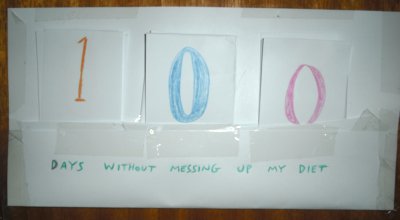
If I have any advice to give – though perhaps my story suggests that I do not – it’s that losing weight requires you to know yourself. I, for example, know that I can never trust myself to “forget about” the points system for just one day – that day turns into a week, then a month, then three months – so now I no longer take days off from my diet. I also know that objectively insignificant milestones like the first day of a week or month are for some reason psychologically important to me, and that if I want to feel like I’m making a fresh start, they are the best times to do so. And finally there’s this:

100 Days Without Messing Up My Diet

I actually stole this idea from myself: the detective character in Project Bubble, my probably defunct webseries, uses a similar cardboard contraption to keep track of how many cases he’s solved. The idea taps into my determination to progress in some measurable way – the longer I go without messing up my diet, the more determined I am not to break the streak.

My current 100 day streak makes me pretty determined. The question is: will the version of me who wakes up tomorrow be just as determined?

I hope so.

Late 2012 – early 2013 reading

Reading! It’s hard to get a lot of it done when you’re also writing a novel. I suspect this is partly evolution’s fault. Over the last few thousand years it could have been preparing us to stare at electronic screens all day, decoding long sequences of symbols and putting new sequences together in slightly different configurations that might hopefully convey meaning to someone, somewhere, some day. But instead it was teaching us to forage for berries, spear sabre-toothed tigers and shiver in caves scraping bits of metal together over piles of sticks. What use are those skills in today’s job market, evolution?! Anyway, in defiance of my ancestors’ way of life, I’ve been forcing myself to make time to read, and that’s good because it means I read some lovely books like these:

Cloud Atlas Cloud Atlas by David Mitchell

It’s hard to describe this book without descending into metaphor: it’s a rollercoaster that spends half its duration cranking you to the top and the latter half plunging you back to earth! It’s a beautiful Rubik’s cube with so many moving parts it may never truly be solved! It’s … okay, if you want to be a literal Linda about it, it’s a series of tangentially connected stories told with amazing skill in various styles, but it can feel very much like those first two things I said. If you’re not used to 19th century adventure stories, the first section might feel a little slow, but it gets more accessible to modern audiences as it goes along. The mystery grows as the layers are pulled back, until the merest hint of a connection between the narratives can set your spine a-tinglin’. If you’re like me you’ll reach the end with the uncomfortable sense that you’ve just read six better books than you’ll ever write, tempered only by the desire to read it again and spot more clues. If that’s not enough for you, it contains a hilariously and depressingly accurate account of travelling by train in Britain.

John Dies at the End John Dies at the End by David Wong

This book is a comical sci-fi horror … thingumy which proves that humour does not have to come at the expense of things like tension, empathy, poignancy and fear, and can in fact heighten them. Much of what transpires is disarmingly silly. Supernatural forces are painted as immature teenagers with a destructive streak, but this makes them somehow more terrifying than the solemn and restrained phantoms of most horror stories. The eponymous John is one of the most memorable characters I’ve read lately, mostly because he seems like exactly the sort of person you’d have gone to high school with – almost too ridiculous to be made up. It can also be so politically incorrect that it seems pointless to even point it out – in that way, and in its grotesque imagination, it reminds me more of South Park than of anything else. South Park mixed with a cheap B-movie mixed with Douglas Adams mixed with god-knows-what. I feel like either I or David Wong (probably me, to be honest) slightly lost the plot somewhere in the middle, but I certainly enjoyed it enough to stick the sequel (This Book is Full of Spiders) on my reading list.

Kafka on the Shore Kafka on the Shore by Haruki Murakami

After reading The Wind-up Bird Chronicle, I knew I had to go back to Murakami at some point, as he’s one of the few writers who genuinely inspires me to paint pictures in my head of the things he describes, as readers seem to be expected to but I rarely do. Kafka on the Shore recounts two cryptically interlinked stories: the vaguely Oedipal tale of a teenage runaway, and the strange adventures of an even stranger old man. It shares certain elements with Wind-up Bird: awkward sex, lost cats, surreal vision quests and bizarre events from the past whose consequences echo to the present. In a certain frame of mind – if I were trying to write an essay on the book, say – I might find the muddling of metaphor and reality frustrating. Even reading it for pleasure, the art-sceptical part of my brain sometimes chimes in “What does any of this mean? It’s just a load of random weird stuff happening. I could write this” before the rest of my brain sardonically responds “Oh yeah? And it would be this beautiful and disturbing and downright hypnotic, would it? Now shoosh and enjoy the ride.”

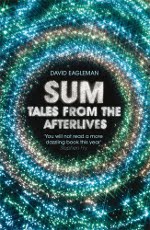
Sum: Tales from the Afterlives Sum: Tales from the Afterlives by David Eagleman

A book I happened to pick up because it was 99p on Kindle, and I’m glad I did. It’s a series of short stories detailing different imagined afterlives. Few of them involve us being judged by the criteria of any existing religion; instead there is an implied new religion to be found embedded in each story. In other words, we could choose to live our lives based on the assumption that any one of these accounts is true; if we believe ‘Metamorphosis’, for example, we may want to spend the latter years of our lives systematically erasing all evidence that we ever existed. If you think you have a good sci-fi idea tucked away in your brain, it’s worth reading this book just to see if David Eagleman has already written about it. Damn you ‘Conservation’! (On a related note, here is another thought-provoking afterlife story, which seems to do the rounds on the internet every so often.)

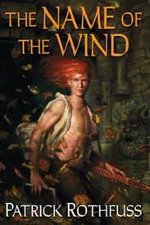
The Name of the Wind The Name of the Wind by Patrick Rothfuss

I’d heard such good things about this book that I couldn’t resist picking it up, despite my fear of reading straight fantasy in case it shows up my own novel. As I feared, there are certain sections that make me go “Awww, that’s sort of like that bit in my book, but way better”; at points Patrick Rothfuss seems to be taking us on a tour of fantasy tropes, going “This is how you do this one well, this is how you make this one interesting”. In some ways the setting feels like a pretty traditional fantasy world, albeit very well realised and rich in cultural detail. One thing that sets it apart is sympathy, a magic system that’s unique in that it … well, it almost makes sense. Unlike the handily vague fireball-flinging nonsense in a lot of fantasy novels (mine included), sympathy has rules which the reader is allowed to learn, so rather than feeling alienated when the protagonist pulls off a particularly badass piece of binding, you say “Ohhh, that was clever, well done!” It’s a great fun book, but if you’re the impatient sort, bear in mind that it is the first of a trilogy that is not yet finished and leaves many a loose end dangling provocatively in your face.

Snails, Sirens, Scary Paintings, Singing Kettles

For this post I’m going to try out more of a journal format. Instead of rambling on for ages about one thing, I’ll ramble briefly about a bunch of fairly unrelated things. If it turns out too disjointed and pointless I won’t do it again – just mixing things up because that’s the kind of crazy guy I am.

I’ve been working on Project Snails for three solid weeks! Go me! After a rocky end to last year, I had an equally boulderesque start to this one – was still recovering from Project Ho Ho Ho and writing the credits song for it which took way longer than it should have – but when I finally got my butt in gear and placed it on a chair in front of a computer with my novel open on it, I found a burst of creativity waiting for me. That’s the upside of taking an extended break from something, I suppose. When you immerse yourself so fully in a project, your unconscious carries on working even when you think you’re doing something else.

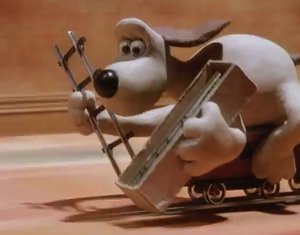
AaaaahhhI’m now at 95,000 words in the latest draft. 100,000 is what I’m thinking of as the halfway mark, though considering how brutally I’ve been cutting stuff during this rewrite, I’ve probably passed the true halfway mark already. Everything’s going pretty well, though one major storyline is having to be so severely reimagined as I go that I feel as if I’m laying down railway track in front of a moving train à la Gromit in The Wrong Trousers. Also, I’m using Scrivener now. It’s pretty good, especially if you have lots of different chapters and drafts which you want to be able to quickly switch between and view side by side. Which I do.
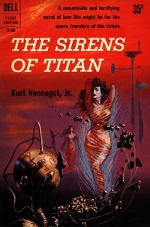
The Sirens of TitanI’m not reading enough. As I’ve mentioned before, writing does this to me. The only book I’ve finished since my last book post is The Sirens of Titan by Kurt Vonnegut, so I might as well talk about that now. Having grown up ingesting The Hitch-Hiker’s Guide to the Galaxy in various forms, it’s hard not to read Sirens as a sort of precursor: wry science fiction (wryence fiction) where dysfunctional people get whisked off to various planets and moons and put in vaguely absurd situations by forces outside their control. In the process it captures some of the random, chaotic, weird beauty of life. Breathtaking imagination is on display, in for example the descriptions of the creatures that live on Mercury, and of the being called Salo; these passages ought to make most writers – myself included and emphasised – slightly ashamed of their own lack of imagination. Also, it’s nice to finally know what my parents were talking about when they used to go on about chronosynclastic infundibula. Nerds.
I’m watching the first season of In Treatment. If you haven’t heard of it, it’s a show which is set almost exclusively within the therapy sessions of several different people. The characters seem so real that it feels almost wrong to be spying on them at their most vulnerable, as the show invites us to. Its more intense episodes can leave you numb and in dire need of a hug. But your investment in the characters’ progress and the weekday-based episode structure draws you back. The music is great too.

I had an incredibly unsettling dream last week. It was framed as a trailer for a horror film, though I was actually experiencing it rather than watching it. I was wandering round an underground art gallery which seemed to have no exits but was quite full of people. All the paintings were fairly normal except for this creepy painting in one room which was of a woman with a messed up face (either she had a freakishly oversized mouth or there was just a hole where her face should be). Gentle, sad classical music was playing in the gallery but whenever I looked at the creepy painting it changed to disturbing, chaotic, dissonant strings. I tried to avoid looking at the painting, but as I walked around I kept hearing the music change as the painting entered my peripheral vision. After a while, bad things started to happen – people in the room with the painting started dying, other paintings started to change – but I don’t remember many more details. The strangest thing was that the dream didn’t scare me that much at the time – as it was a trailer, I was more impressed by its scariness than scared by it – but the more I thought about the dream the following day, the more it freaked me out. Posting it here in the hopes of exorcising it from my mind, so apologies if it latches on to yours.

Our Singing Kettle spoofThe actual Singing Kettle people apparently saw our dirty Singing Kettle parody. This was mentioned in a recent issue of the Scottish Sun (the article is also online but I won’t link to it because I feel icky enough just being mentioned in a tabloid). The main emotions this conjures up are the customary shock and disbelief that come with my stupid little world making momentary contact with the larger, real world, and some to-be-expected traces of shame. At least they were nice enough to laugh it off, so we can probably stop worrying about being sued now!

Thoughts on Scottish independence

A few warnings first: this post will basically be me trying to get all my thoughts on the subject of Scottish independence out of my head and onto virtual paper where hopefully they’ll look less contradictory and confusing. It’ll be way too long, and more political than I usually like to get here. I’m not trying to change anyone’s opinion, just working through my own thoughts, as the title of my blog implies. Ignoring them is not only possible, it is probably wise – especially if you have a distaste for idealistic left-wing ramblings.

I was born in Scotland and have lived here all my life. From my grandmother back, my mum’s ancestry (of which she has made impressively thorough maps) is almost entirely Scottish. But my parents and brother were born in England and we all have English accents – though in an unsuccessful attempt to fit in at primary school I adopted a weird fake Scottish accent which has now become just as natural to me. (Is that weird? Subject for another blog in the “my messed up brain” series, perhaps.)

This is Scotland. I like it.

Some people tell me that all this obviously means I’m Scottish, others tell me it means I’m English, but these assertions always leave me utterly baffled. What do these words mean? If defining them involves feeding numerous factors through complex equations that vary depending on who you ask, what’s the point of trying to force people into such rigid categories in the first place? Why should they have any relevance to anyone, ever?

So I’ve never felt any real sense of identification with either Scotland or England. Not patriotism, certainly – not even that pervasive jokey kind of patriotism which for English people is something along the lines of “It’s so funny how we’re only happy when we’re grumbling about things! Have a lovely cup of tea, that’ll make everything better! Stiff upper lip, pip pip!” and for Scottish people goes something like “It’s so funny how much more gritty and down-to-earth we are than those English pansies! Aye, we like tae go an’ get pished, ma son. Freeeeedoooom!”

My sense of outsiderhood is not something I think would be fixed by an independent Scotland. Which is fine, it’s the way I am. But typing all that out does help reinforce my conviction that my views are not influenced by any hidden undercurrent of national identity. As someone who’s still unable to get his head around why anything short of a complete open borders policy towards the entire world isn’t considered fundamentally racist, I think it’s safe to say I don’t quite get the concept of nations.

As such, I hate the idea of siding with a party with “national” in its name. It makes me very wary. I spent a while before the last election poring over the SNP’s manifesto, looking for suspicious parallels to the policies of the BNP (Britain’s favourite far-right “we’re not racist but ha just kidding we are in fact massively racist” political party). Even after reading all the SNP’s pleasant sounding policies and seeing them described on Wikipedia as a “centre-left” party, I still don’t quite feel comfortable with that N in their name. But I’ve managed to dismiss this as a largely irrational bias and vote for them a couple of times – more due to a lack of other desirable options than anything else. The question of Scottish independence didn’t enter much into this decision, as I knew that question would be asked via a separate referendum, so a vote for the SNP was not in itself a vote for independence.

But the referendum is coming, and I’ve been trying to get to grips with the question. Should Scotland break apart from the UK and become independent? I used to think the answer was obvious: no. But as with many obvious answers, I hadn’t really bothered to examine it. Now I’m not so sure. On closer inspection, a lot of the pro-union opinions I’ve heard come across as just as nationalistic as the pro-independence opinions – they’re merely nationalistic about the UK rather than about Scotland. “Look at our great nation, together we can do anything! Look at all these great things we’ve done together! You’re not seriously suggesting that anything could be better than this?”

This is England. I like it too.
But if anything is justification for devolving power, surely it’s the clear, long term split in political inclinations between the population of Scotland and the population of England. A far greater proportion of Scottish people vote for left-wing parties, to the point that the Conservatives often come in fourth place overall here (behind the SNP, Labour and the Lib Dems, all relatively left-wing parties), even while they come first in England. The current Scottish parliament (opened in 1999, with limited powers and still beholden to the UK government on many matters) is a battlefield primarily between Labour and the SNP, both parties whose basic political ideologies (if not always their methods) are generally okay by me.

So maybe my attraction to Scottish independence is a selfish thing. It would certainly be nice to live somewhere where I could open a paper and read about politicians having mature debates about nuanced, progressive issues, rather than depressingly dredging up old ones that should have been put to bed decades ago with a simple “well, duh”. (Two recent examples: “Should we be paying taxes to help people who are disabled or sick?” and “Should gay people have the same rights as straight people?”) On the other hand, it might feel like throwing the rest of the UK to the Tories, which I would feel guilty about. But should I? If the majority of people in England really do want to keep electing Tory governments, I guess they should have the right to. And if the majority of people in Scotland want to move in a different direction, shouldn’t they have the right to do that too? Maybe Scotland and England’s political destinies should not be tied together as closely as they are now.

I’ve heard conflicting soundbites about Scotland’s ability to survive as an independent economy – some say it relies on subsidies from the rest of the UK, others claim it more than pays its share. It’s frustrating not to know enough about economics to be able to sort the truth from the lies, but honestly things would inevitably change anyway. I don’t think anyone knows what’ll happen to the Scottish and UK economies if this split happens; especially following recent world events I’m extremely unconvinced that economists ever truly know what they’re talking about. But surely the absolute most important question a democratic society can ask is “Does our government fairly represent the people?”, and everything else must follow from there – it doesn’t matter how good the economy is if the government wasn’t elected fairly. Maybe this is an embarrassingly naive thing to say, but economies ought to be shaped to serve the needs of the people, rather than holding them hostage and preventing them from ever changing the political power structure.

My current leaning towards independence comes with so many caveats that it might not count as support as such. I’ll certainly be trying to process all the rational arguments for and against in the lead-up to the referendum, while at the same time trying to filter out the romanticisation, scaremongering and pseudo-intellectual white noise that makes up the majority of the “debate” from both sides. I hope anyone with a say in the matter will join me in doing so.

Ho ho ho! We did it!

And by “we” I mean me and a group of my friends. Mostly me and Gavin. Okay, me and Gavin and Euan and James. Okay, a whole bunch of people, including some lovely people who I don’t even know that well, but who got roped in to help us out. Thank you, all of you, for helping us get it done.

And by “it” I mean the Beyond Studios Advent Calendar, a collection of 25 comedy sketches we made for the first 25 days of December 2012. I’ve mentioned it before; it was Project Ho Ho Ho, one of the eleven projects mentioned in the very first post on this blog. Which means it is the first of those projects to be definitively finished. Hooray! If there’s one thing that can make absolutely anything feel worthwhile, it’s scoring a big line through it on your To-Do list.

But before I do that, I want to take a quick look back at it. For all my self-ascribed creativity there aren’t many things I’ve done that have produced a complete, publicly accessible end product, and this is one of even fewer that I’m really quite proud of. It was also quite an intense experience in that Gavin and I spent pretty much a whole month working on and thinking about nothing else but the advent calendar. There was a fair amount of stress about filming during the days and an unfair amount of staying up into the small hours of the morning to get sketches edited in time. But it was worth it. For someone who’s been unemployed for far too long, there is something refreshing and necessary in tearing yourself out of bed at 5am and setting out into the cold pre-dawn to catch a train to Glasgow and help film a guy running around in only boxer shorts and clown make-up.

Which reminds me, here’s a sketch I wrote:

[youtube http://www.youtube.com/watch?v=WO11W8BbzkU&w=560&h=315]

There! Preserved for future generations to enjoy. Something you might have noticed about that was that it was a bit weird. I seem to have trouble writing normal sketches – the sort where someone walks into a shop and has an amusing conversation with someone else – so most of the ideas I came up with for the advent calendar (many of which didn’t get past the ideas stage) were what you might call “gimmicky”. Here’s another example, based on the constant stream of thoughts inside my head in various social situations:

[youtube http://www.youtube.com/watch?v=JKOUMMedq-o&w=560&h=315]

That sketch is one I wasn’t quite sure about when we were making it. I had the idea for a while but didn’t write it until a couple of days before we had to film it. I kept rewriting the ending but couldn’t work out how to make it punchy, and I started to want to shelf the idea until after the advent calendar to give myself more time to do it justice. But we needed all the sketches we could get, and the filming was already partially arranged, so we bit the bullet and went ahead with the best version I had. Ultimately, I think the actors are great and make it work, so I’m glad we did it. It’s easy to keep all your precious ideas locked away, never fully developing them in case they don’t turn out the way you imagine. The advent calendar provided just the right amount of pressure to make us release some of our ideas into the world, regardless of whether they were perfect. I think that’s a valuable thing sometimes, especially in terms of learning to do better next time. And it clears some space on your shelf for new ideas.

Anyway, let me link to a few others not written by me, to show I’m not entirely self-centred:

  • Hilarious Pranks! is probably my favourite of all the sketches, though some would say we went too far with it.
  • This spot-on Masked Magician parody was written by my brother.
  • Jesus: The Teenage Years has been received well by those who don’t mind a bit of light sacrilege.
  • People also seem to like Royal Pregnancy, our most topical sketch – written, filmed and edited overnight after the announcement of the royal baby on the 3rd of December.
  • Though I hesitate to link to it, this terribly vulgar Singing Kettle parody is our most viewed video and one of the few that seems to be continuing to accumulate views. People are disgusting, and clearly I can’t exclude myself from that statement.

And that’s just a scattering of the sketches we made. If you enjoy these, please do go and watch the others (and delve into the older videos on our YouTube channel if you feel like it). One of the most interesting things about this whole project was seeing other people’s reactions to what we did. Even though we weren’t sure of some of them, I’ve heard almost every sketch being singled out by someone as one of the highlights. Which suggests to me not only that we didn’t make too many irredeemably bad sketches, but that we made quite a variety of them to appeal to different tastes. That may be the thing I’m most proud of, and reassured by. 🙂

A hyperbolic blog about the Walking Dead game

I’ve said before that each of us has several parallel lives that we switch between at various intervals. Maybe we have friends who we only see at school or university, but when we go back after the summer it seems as though we were never apart. Maybe we have family in faraway places, and every time we go to visit them we feel like children again; grown-up life seems worlds away, and it’s hard to believe it’s actually still going on somewhere out there beyond our little bubble.

On occasion, great works of fiction can transport you away from normal life in a similar way. They introduce you to people who stick in your mind, and when you encounter them again – by rewatching that film or picking up the new book in that series – you feel as though some part of you has been with them all along, just waiting to get back to the important business of having adventures with them. For the brief time you are immersed in their world, everything else seems unimportant. When you do emerge into the so-called real world again, you spend a while thinking you can hear them calling to you from some hidden place not too far away, like people from a dream that was secretly real but shhh don’t tell the dreamer.

Walking Dead screenshot 1
These actions moments are tense, but as in real life, the lion’s share of tension occurs when you’re talking to people.
Well, this blog post is off to a pretentious start, but I finished episode five of the Walking Dead game today, and that’s the effect it has had on me. I’ve been a fan of Telltale Games for as long as they’ve been making old style adventure games; I particularly enjoyed their revival of Monkey Island, which hinted at some of the potential of episodic games to get people invested in stories and characters. But The Walking Dead takes their approach to new extremes, and is not only their best game by far but one of the most gripping and emotionally affecting games I’ve ever played.

Of course, I can only assume that the real zombie apocalypse, when it happens, will be MORE gripping and emotionally affecting than this game. But this game, in my opinion, represents a rather disconcerting leap forward in terms of making entirely fictional stakes seem high. Telltale have clearly learned to trick some important part of my brain into thinking their game is real, even in the face of comic book style graphics, occasional glitches and punnily titled Steam achievements popping up in the corner. In doing so, they briefly provided another parallel life for me to switch into whenever I felt brave enough – although now the season is over I doubt I’ll have the stomach to replay it for a long time, if ever.

The Walking Dead hints at the amazing, though routinely squandered, potential which games might have to transport people in ways no film can. When you watch a film, you know that whatever you do – whether you tense your muscles or cover your eyes or drift off to sleep – the narrative will play out in the same way: those two attractive characters will fall in love, that guy in the red shirt will die, the world will ultimately be saved. Games, and this game in particular, add an extra element of urgency by requiring the player to stay actively involved, paying attention and making decisions if they don’t want everything to fall apart.

Walking Dead screenshot 2
These two are better characters than any in the TV show. There, I said it.
This, to me, makes it feel overwhelmingly more absorbing and personal than almost any film I’ve ever watched. The fact that it’s up to me to choose what the main character says and does – and that I have to live with the consequences when I say and do the wrong things – forces me to invest effort in getting to know these characters, and makes their relationships feel much truer and more meaningful than the unnaturally crafted relationships I observe from a distance in most films. This opens the door to experiences films – and real life – have never given me.

Most significantly, I’ve never felt fiercely protective of a child in real life, but this game gave me a worryingly late-in-life epiphany about why parents feel so protective of their children. I’m not saying I know what it’s like to be a parent now, but this game certainly made me feel more like one than anything else ever has. It helped me to know myself a little better, and it was nice to discover I may not be an entirely broken human being. If it seems silly for me to talk about a mere game in such lofty terms – well, I’ll say this: plenty of great symphonies, poems, films, novels and paintings have failed to make me see myself or the world in a new light, while the Walking Dead game has succeeded. And it’s got zombies.

You’ll notice I’ve been incredibly vague about the plot of the game; obviously I don’t want to spoil anything. All I’ll add is that if you’re okay with cartoony gore and the odd dollop of emotional trauma then I recommend it very much. It feels like a glimpse into a future where some games might more accurately be called experiences. Whether it’s “fun” or not, you go into this sort of experience as one person and emerge as someone ever-so-slightly different, with another dreamlike chorus of fake friends’ voices ringing in your ears. We’re undoubtedly far from the point where fantasy and reality are indistinguishable, but for me the line just got a tiny bit blurrier. And this excites and scares me to no end.

Good housekeeping

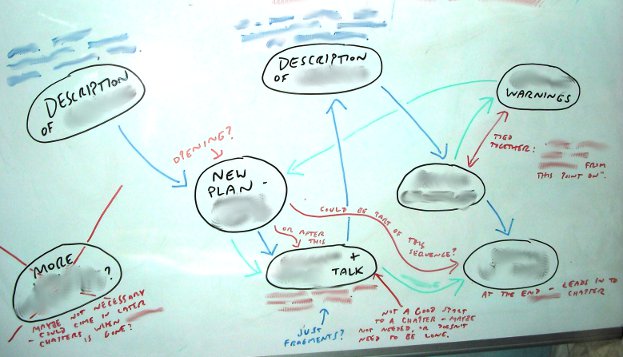
If you are a writer and you own a whiteboard, at some point you inevitably end up with something like this:

White board nonsense
If you want to find out some secret details about Project Snails, feel free to do some CSI-style image enhancement on the blurred out areas here!

This is a diagram to help me rethink one particularly troublesome chapter in part two of my novel. I’m finding that the most troublesome chapters are the ones without a central nucleus to hold them together. If something major happens in a chapter, it’s fairly easy to structure. You know where the meat of your chapter is, and arranging the more minor points around the edges isn’t too much of a challenge.

But then there are “housekeeping chapters”, where all you have is a bunch of small but essential things you need to get done. For example, you need to build up the relationship between two characters, you need to describe the place they are passing through, you need to reveal a bit of someone’s backstory, and you need to get a certain object into someone’s possession. How can you make these things flow into each other and feel like a coherent whole? What should come first? How can you best end the chapter in a way that fools the reader into thinking something meaningful has happened?

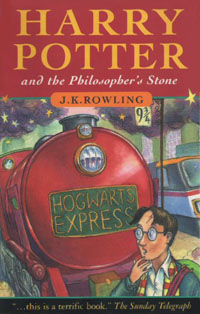
Harry Potter and the Philosopher's StoneOne of the ingenious things about Harry Potter (and there are many) is that there are very few housekeeping chapters, at least in the early books. If you go back and flick through Philosopher’s Stone (I know you have it, don’t lie to me) and look at the chapter names, I guarantee you’ll audibly go “Wow, this is a veritable treasure trove of stuff!” Pretty much every chapter has a strong central concept – some major event or new element of the wizarding world that we’re being introduced to. Maybe it’s just because everything has become so iconic now, but for flip’s sake: we go from meeting Hagrid to visiting Diagon Alley to travelling on the Hogwarts Express to being sorted by the Sorting Hat to meeting Snape … I say we because that’s who it feels as if it’s all happening to, and I don’t have a bloody clue how she does that … oh god, I so want to go and reread Harry Potter now.
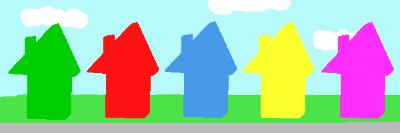
Anyway, what was I talking about? Oh yeah. Housekeeping chapters. Ultimately I should probably try to purge them from my book, or at least make them feel less like housekeeping chapters, but for now I’m struggling just to give them a coherent structure. There’s a lot of “Well, this needs to happen before this, but a bit of time needs to pass between that and that, and if that happens before this then I’ll have to cut that bit out, unless I move this other thing to an earlier chapter… aaargh! Okay, that’s it, I’m getting out my whiteboard!” It becomes like one of these logic puzzles:

Houses from left to right: green, red, blue, yellow, purple
This is Puzzle Street. For some reason only one person lives in each house, except for one of the houses which has been empty since its owner was killed in a tragic cryptic crossword accident. Some facts about the street’s current occupants: Bob got sick of all the stupid puns about him living in a green house (example: “What’s it like living in a green house, Bob? It must get hot in there during the summer!”), so he swapped houses with Alison, who lived at the opposite end of the street. Todd likes to spy on Alison in the shower, but she lives two doors away, so he has to borrow binoculars from Jane who lives next door to him. Sometimes Jane’s other next door neighbour sees Todd borrowing the binoculars, but she’s too busy wondering where her next fix is going to come from to think anything of it. Which is the empty house? Have fun! (Clue: IT’S THE YELLOW ONE.)

And this doesn’t just happen within individual chapters. You can end up shuffling the order of chapters around, and that gets even messier – especially if, like me, you switch between viewpoints and the idea of putting two chapters told by the same character next to each other makes your toes curl in abject disgust. That’s when you find yourself walking past stationery shops and thinking “Hmm, maybe I should get some Post-it notes, they’d make this whole process less painful”. And before you know it, you’re waking up in the stock room of W H Smith, high on highlighter fumes and covered in Pukka Pads filled with scribbled plot points and character arcs.

And after all this is sorted out, you discover that while you’ve been focusing all your attention on how to logically progress your story from point A to point B, your characters have turned to cardboard and your style now consists exclusively of sentences like “the man walked through the door”. Time for another rewrite, and time to uncover another set of deep structural problems with your story! Yay! Writing is such a joyful cycle.