It’s been a few weeks since I saw Inside Out, but I haven’t been able to stop thinking about it since. This is generally a sign that it’s time to arrange my thoughts into something resembling a coherent blog post.
First off I should confess that I don’t really get films. I mean: I watch them, I (usually) understand their storylines, I recognise the hard work that goes into making them, but I just don’t have the reverence some people seem to have for the medium. As a rule I don’t sit in the cinema as the credits roll and think “now that was a great film”. But in the past, Pixar has been responsible for at least two notable exceptions to this rule (namely Finding Nemo and Wall-E – though I also liked Brave enough to write a blog about it), so I was very interested to see what they would do with the idea of personified emotions, a premise so far up my street that I practically live in it.
There will be spoilers, so if you haven’t seen the film, see it as soon as possible (assuming it’s still playing) and then come back and read this. Or just see it and don’t bother reading this, since it is a perfectly self-contained work of art, to which my blabbering will probably add very little.
Major Spoilers barks: “MAJOR SPOILERS BEGIN HERE!”
At the core of Inside Out is a question not many stories tend to ask, despite the fact that it seems fairly central to the experience of being human: what is the point of sadness? The question is posed very early on, but it’s phrased as a joke so like an idiot I didn’t notice it was actually the set-up to some of the more profound and emotional moments in the latter half of the film, where we finally realise that Joy and Sadness do not have to be enemies.

Another ingenious element of the film — and I’ll admit this is something that films, especially Pixar films, can do very well — is the way it creates a vocabulary, a visual language all of its own, around the concept of the memory sphere thingies. From the beginning we are taught what these look like, how they are created and stored, and what the different colours mean. Not only does this provide a lot of intelligent laughs along the way, but by the end we are primed to understand exactly and implicitly what the new, multicoloured core memory means, without the characters needing to say a word. The visual vocabulary that has been established over the course of the film is subverted in a way that conveys a new meaning, a meaning that never has to be explained in conventional terms. It’s all there in the imagery, so it bypasses the linguistic circuits of your brain and just grasps you by the heart.
But on reflection, I think the best and cleverest thing about Inside Out is how mundane the Out part is. Again, Pixar did not take the obvious route: it would have been so easy to cook up a melodramatic real world story to trigger all the fireworks in Riley’s head. But no, they keep it subtle and restrained — just a few little nudges which begin the process of her inner world absolutely falling apart.
To me, this only adds to the story’s power, because it demonstrates how seemingly trivial things can have a serious impact on a person’s psychology. Especially in fiction, people are often expected to display superhuman emotional strength, or be criticised as weak. If we didn’t see Riley’s inner world, I have no doubt that a portion of the audience would go: “oh for god’s sake, the spoilt little brat’s sulking and running away and crying just because she had to move to San Francisco?” But because of the metaphorical world so lovingly crafted by Pixar, we understand. We feel what she is feeling. The everyday trials of growing up, so easy for cynical adults to scoff at, are portrayed as heartbreaking, world-destroying — which is great, because that’s exactly how they feel to the person going through them.
So not only is Inside Out a beautiful, funny, inspiring experience from beginning to end, it has caused me to think long and hard about the purpose and potential of storytelling. I certainly can’t think of another film that creates empathy in such a unique, vivid and powerful way. And in an age that sometimes feels characterised by a horrifying lack of empathy for other human beings (see pretty much every newspaper currently being printed in the UK, the comments section of every online article and video, etc.), perhaps that’s something art should aspire to more often.
 Firstly, I haven’t properly talked about it here yet, but in September of 2014 I created a new podcast called
 Secondly, late last year I helped some of my more talented friends make
 I’m now at 95,000 words in the latest draft. 100,000 is what I’m thinking of as the halfway mark, though considering how brutally I’ve been cutting stuff during this rewrite, I’ve probably passed the true halfway mark already. Everything’s going pretty well, though one major storyline is having to be so severely reimagined as I go that I feel as if I’m laying down railway track in front of a moving train à la Gromit in
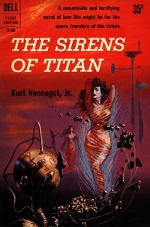 I’m not reading enough. As I’ve mentioned before, writing does this to me. The only book I’ve finished since my last book post is The Sirens of Titan by Kurt Vonnegut, so I might as well talk about that now. Having grown up ingesting The Hitch-Hiker’s Guide to the Galaxy in various forms, it’s hard not to read Sirens as a sort of precursor: wry science fiction (wryence fiction) where dysfunctional people get whisked off to various planets and moons and put in vaguely absurd situations by forces outside their control. In the process it captures some of the random, chaotic, weird beauty of life. Breathtaking imagination is on display, in for example the descriptions of the creatures that live on Mercury, and of the being called Salo; these passages ought to make most writers – myself included and emphasised – slightly ashamed of their own lack of imagination. Also, it’s nice to finally know what my parents were talking about when they used to go on about chronosynclastic infundibula. Nerds.
 The actual
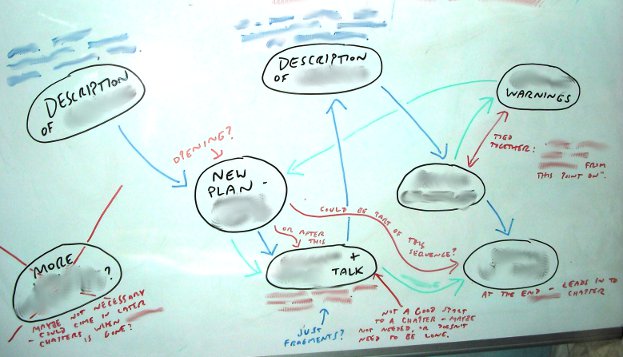
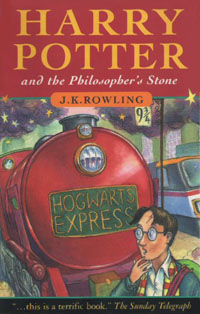 One of the ingenious things about Harry Potter (and there are many) is that there are very few housekeeping chapters, at least in the early books. If you go back and flick through Philosopher’s Stone (I know you have it, don’t lie to me) and look at the chapter names, I guarantee you’ll audibly go “Wow, this is a veritable treasure trove of stuff!” Pretty much every chapter has a strong central concept – some major event or new element of the wizarding world that we’re being introduced to. Maybe it’s just because everything has become so iconic now, but for flip’s sake: we go from meeting Hagrid to visiting Diagon Alley to travelling on the Hogwarts Express to being sorted by the Sorting Hat to meeting Snape … I say we because that’s who it feels as if it’s all happening to, and I don’t have a bloody clue how she does that … oh god, I so want to go and reread Harry Potter now.