For whatever reason I haven’t got round to doing one of these for ages. Luckily I also lost a lot of my reading mojo a year or two ago, so it’s not as if I have hundreds of mini-reviews to catch up on. Still, this could be a long post, so strap into your listening-to-my-opinions-on-books-I-only-sort-of-half-remember-at-this-point seat and get comfy!
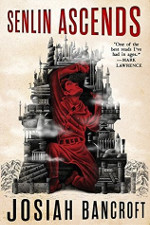 |
Senlin Ascends by Josiah Bancroft
Based not in our world but one seemingly very similar, Senlin Ascends quickly veers into a sub-world which feels very different indeed, a strange tower where the exotic meets the fantastical meets the downright bizarre. The main character provides the same sort of stuffy but good-hearted perspective as the protagonist of one of those old vaguely colonialist adventure stories – and as in those, we see a slightly uncomfortable conflation of “foreign” with “dangerous, predatory and unknowable” in the early chapters. Still, as the story goes on and Senlin makes his slow ascent up the tower, he begins to recognise more of what he sees and adapt to his perilous new circumstances like a fantasy Walter White. It’s not quite as larger-than-life mythical as I expected, more about ordinary humans living in various imagined societies, but it’s still an enjoyable fantasy romp in a unique and characterful world – or the first chunk of one, at any rate. |
|
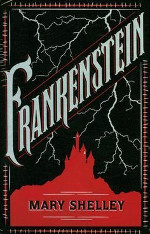
Frankenstein by Mary Shelley
It’s always impressive when an early and defining work in a genre brings such a richness of ideas to the table. I’m pretty sure if I’d come up with the idea of a scientist creating a humanoid creature in a lab, I’d be so chuffed with myself I wouldn’t feel the need to put in much else, except maybe a bit of mindless killing to pad it out and get the morality police in a tizzy. But Shelley – who was absurdly, unfairly young when she wrote this – crammed it full of character and intrigue and complexity, fully earning this novel’s classic status. Some people might get frustrated by all the layers of narrative you have to peel back to get to the juicy bit everyone’s waiting for, but for me these layers do important work ramping up the tension and immersing us in the world, to the point that by the time we meet the not-so-titular creature, a part of our brain we can’t quite ignore is babbling “Wow, it’s crazy that this all actually happened”. Also of note is the frequency with which characters will go off on melodramatic rants about how wretchedly miserable they were, how no person on Earth can imagine the suffering they experienced, but this doesn’t detract from the story – if anything, perhaps perversely, it provides a touch of dark amusement in the midst of the gothic gloom. |

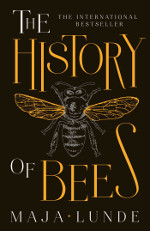 |
The History of Bees by Maja Lunde
Three stories told by three narrators in three different times, interwoven to tell a larger story about bees and how their role in the ecosystem supports a delicate house of cards on which much of our society is built. There’s a lot going on thematically here, and I admire the ambition, but I wanted to like The History of Bees more than I did. The rest of my book club seemed to enjoy it, but I was put off by the nearly indistinguishable writing styles from what should have been three extremely different perspectives (the comparison to literary shapeshifter David Mitchell on the cover didn’t do it any favours in this regard). I also found the father-son class divide subplot rather forced and superficial (as well as being overdone enough to have been perfectly parodied in Monty Python’s ‘Working Class Playwright’ sketch almost half a century ago). Sadly, all this book’s disparate pieces didn’t really add up to anything. Not for me, anyway. |
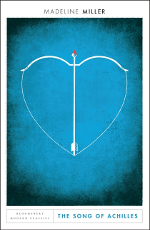 |
The Song of Achilles by Madeline Miller
A wonderful surprise. I must confess: the idea of retelling ancient mythology from a new angle does not automatically excite me. I suppose I worry that the authors may lean too heavily on their readers’ presumed familiarity with the source material, and use that as an excuse not to bother establishing their protagonists as people, let alone people worth caring about. Maybe that’s enough to satisfy a significant audience, but like Frankenstein this book goes beyond “enough” into a realm of plenty, spoiling us with rich world and character building. Miller does such an exceptional job with Patroclus and Achilles that knowledge or attachment to the original myth is unnecessary. Myself, I had only a glancing familiarity with it, and now, having experienced Miller’s beautiful telling, I will be hard pressed to shake it as the definitive version of the story in my mind. Thanks perhaps to medication it has been a long time since I cried at a book (Book of Lost Things, if I recall correctly), but the ending of this one got me damned close. |
 |
The Great Gatsby by F. Scott Fitzgerald
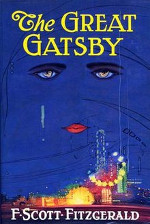
Everyone says this book is amazing, and perhaps because I’m eager to please and don’t want to seem like a dummy, I believe them. But in truth I am a dummy – a dummy who probably needs to go back for seconds with this one, maybe with a study guide propped open on the arm of my chair – because I thought it was pretty okay, nothing to write home about. Maybe it speaks more to Americans? In which case that’s fine, they get to have their great American novels that wrap their subtle wordy tendrils around all the rich nuances of the American dream and squeeze till it cracks apart – and we’ll have… um… Little Britain I guess? Anyway, for most of the time I was reading Gatsby I felt as if I was searching for the plot like a babysitter frantically scrabbling to locate a child before anyone realises they’ve misplaced it. By the time I got a real feel for the understated character work at the heart of the book, it was almost over. Like I said, me dumb. This is what happens when I don’t read enough. |
 |
His Bloody Project by Graeme Macrae Burnet
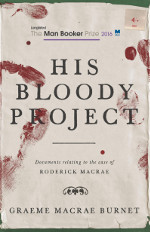
Not the sensationalist tale its title suggests, but rather an intimate portrait of a life gone wrong in a small Scottish town, His Bloody Project accomplishes one of those envy-inducing writing feats, in that the final two words of the story pretty much encapsulate the entire plot. But along the way there’s a hell of a lot to get into – Burnet raises a veritable zombie army of questions about the way we used to view criminality and in many cases still do. How do we decide if a person is morally responsible for a crime? Is it more excusable if they are insane, or if they had an understandable reason to do what they did? Should we pay any heed to the criminal’s own account of the crime, or dismiss it out of hand? And is capital punishment ever right? Well… no. Phew, finally a question I feel confident in my answer to! It’s nice to finally find solid ground after such a morass of moral ambiguity and unreliable narration. |
 |
Fever Dream by Samanta Schweblin
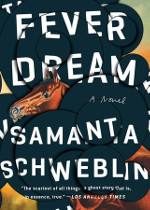
A nightmarish little treat I devoured almost entirely in one sitting, which is a rare feat for me – but it’s gripping and short, with nary a chapter break in sight, so there’s really no good place to stop. It does a good job of imbuing everyday life with a morbid and sinister hum, the sense that something really, really bad could be about to happen at any moment, which I suppose it could. That’s the scariest thing about Fever Dream – there are hints of the supernatural, but generally speaking it centres around anxieties that are actually founded in reality, such as the fear of your child getting hurt or turning into someone you don’t know or don’t like. Oh yes, I should probably warn you: this book may be extra traumatising to read if you’re a parent. The two parents in my book club seemed fairly unfazed, but they’re a bit weird really. |
 |
Amphibian by Christina Neuwirth
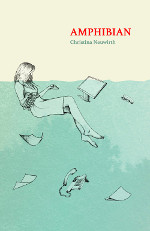
An enjoyable but fairly lightweight satire on office culture, in which employees in an Edinburgh office are casually informed that their work space will be gradually submerged in water until productivity increases. My abiding takeaway (mmm, takeaway) was that the plot could easily have been an arc in a Dilbert comic strip, though that is perhaps unfairly reductionist, and anyway, it’s not the worst thing to say about a book. The straight-faced absurdity and familiar local details kept me smiling throughout, and a certain bit involving an email exchange about a shark made me cackle out loud. |
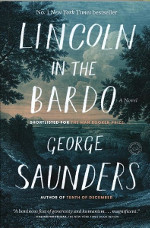 |
Lincoln in the Bardo by George Saunders
It’s the question on everybody’s lips: what if, when Abraham Lincoln’s young son died, he bumped into a bunch of ghosts hanging around the graveyard complaining at each other about the state of the afterlife? Or the in-between-lives, or purgatory, or whatever this place is – you know, for a book almost entirely set in said shadow-realm, it manages to leave the nature of death impressively ambiguous! But that’s not really the point, I suppose – it’s more about the dead mirroring the grief of the living, and the non-existence of free will, and how to turn your despair into a love of humanity, and a whole bunch of heavy stuff, but it also stars a ghost who, for reasons that make an almost dismaying amount of sense… um… constantly has an erection. Let me be clear: Lincoln in the Bardo is nuts, but in a very clever way. It’s like if Shakespeare got drunk off his face and then tried to recreate The Graveyard Book, having only hazily overheard Neil Gaiman relating the plot through a time portal with a bad connection several years prior. But perhaps even better than that makes it sound. |
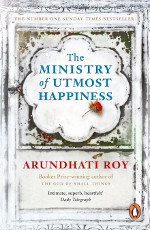 |
The Ministry of Utmost Happiness by Arundhati Roy
For the record, I consider Roy’s only previous novel, The God of Small Things, a strong contender for best book I’ve ever read, which piled some pretty crushing expectations on this one. Where Small Things took us on a guided tour of one family’s trauma, Ministry has a more sweeping narrative, starting with a transgender woman living in a graveyard and going on to document several tumultuous episodes in Indian history which I was far too ignorant to know the context for. It carried me downstream swiftly enough, feeding me little morsels of what I remembered loving – startlingly poetic language, razor-sharp cultural commentary, an admirable disregard for societal norms – but I was always waiting for that Small Things moment of being yanked out of the water, hook through my throat, struggling to breathe, and it never came. Maybe not every book needs that. Maybe I don’t ever want to feel that way again anyway. Maybe in a decade or so I’ll reread this book and the hook-through-the-throat feeling will catch me even more off guard. I dunno. There’s a lot going on here and maybe I don’t understand it all and maybe I’m not meant to yet. (If you’ve ever wondered why I don’t assign review scores, my last few sentences ought to make that clear.) |
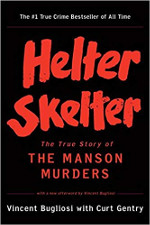 |
Helter Skelter: The True Story of the Manson Murders by Vincent Bugliosi and Curt Gentry
As a genre, true crime still makes me feel just a little icky. Why give serial killers and their ilk credit for representing some unspoken dark thread in all of humanity, when they make up such a tiny percentage of the population? But some cases it’s hard not to get drawn into, and this is certainly one of them. Manson himself is a terrifying and complex figure, who weaves nonsensical yet wildly disorienting word webs of a sort that continue to frustrate those who value clear language and critical thinking to this day. But more fascinating, heartbreaking and perhaps even scarier are the “family” – a cult-like collective of people, mostly young women, drawn in by Manson’s dangerous magnetic charm and convinced to carry out the most violent acts imaginable with no apparent remorse. This account takes us through the crimes, the investigation, the trial and the aftermath in a deftly spun narrative – if you can make peace with the inevitable hints of subjectivity that creep in here and there due to Bugliosi’s role as the prosecution attorney, he is an excellent guide through the many twists and turns of the case. |
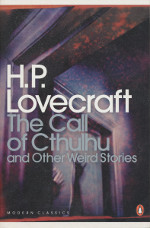 |
The Call of Cthulhu and Other Weird Stories by H. P. Lovecraft
Lovecraftian horror can be fun if you’re into great and terrible forces beyond our understanding – me and a couple of friends have had some enjoyable dabblings with the Cthulhu tabletop RPG lately – but there are major caveats. The evil betentacled elephant in the room is Lovecraft’s racism, which goes beyond the usual blithe cultural insensitivity of his time and into territory that simply will not sit well with you if you’re a decent human being. Not all these stories are inherently racist, but at least a few of them are, so be warned. If you’ve trained your brain sufficiently that you can put all that to one side and enjoy what Lovecraft did well, you will find a selection of tales that are still unnerving to this day, if somewhat diminished by the huge influence they have had on horror and science fiction in the intervening years. Read these stories, by all means, and savour the chilling moments – among my favourites were ‘Shadow Over Innsmouth’ and ‘The Festival’. Just be ready with your critical thinking pistol to fight off the monsters that lurk within – not all of them are the fun kind. |
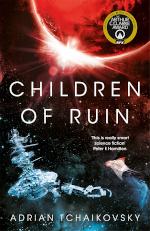 |
Children of Ruin by Adrian Tchaikovsky
Following up the aeon-spanning Children of Time seemed so impossible that I was worried about how the author might approach the task. Would he play it (relatively) safe and stick purely with the civilisations introduced in the first book? No, as it turns out – and as I later heard him say in an interview – he felt obliged to push the boat out even further. And indeed, the new lifeforms we encounter are far more alien than mere giant spiders, so alien that most authors would surely stumble, making them either too human or too abstract to make sense of. Instead Tchaikovsky manages to weave another beautiful web of story that casts humans in roles not dissimilar to classical gods, bickering and flawed and drunk with power, their clashes making universe-changing ripples in the cosmos. Further elevating Tchaikovksy to a level I might pretentiously call “proper science fiction”, is the resolution, which comes about not through violence or genocide, but through a mixture of science, philosophy and even compassion. Looking back, I don’t know that this book made quite the lasting impact on me that Children of Time did. But holy crap did it come closer than I had any right to expect. |
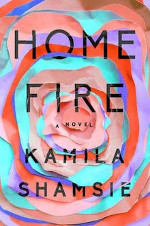 |
Home Fire by Kamila Shamsie
Home Fire recounts how terrorist propaganda drives a wedge right through the middle of a family of British Muslims, and the impressive catalogue of ways in which the UK government manages to make the situation much, much worse. Do I only love this book because it plays into my existing views of most of our recent governments as a bunch of hypocrites, and of wishy-washy centrist politicians as spineless racism enablers? Nah – I mean, that certainly doesn’t hurt, but I’m pretty sure it’s also just great. It feels like a primal story both modernised and boiled down to its core components, told punchily and powerfully with very little unnecessary fannying about – pretty much the opposite of anything I’ve ever been able to write. As much as I hate that this is the case, it also feels like a brave book to write in a world where “Googling while Muslim” can still get you in trouble. Please read this book – it’s not only important but artistically unimpeachable, drawing us inescapably towards one of the best endings to a story I’ve experienced in ages. |
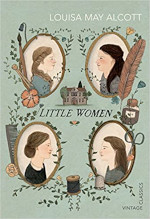 |
Little Women by Louisa May Alcott
I’ve realised I find a lot of joy in books that describe small domestic pleasures – some of my favourite parts of Harry Potter, for example, are the downtime when characters are just hanging out in the Gryffindor common room or at the Burrow; they feel like a little slice of home in book form, if that’s not too tragic an admission. Little Women is basically that for almost its entire length – a cosy, homey, gently witty, wholesome, sentimental, charming, preachy as heck ramble through the lives of four very distinct young women – and I loved it. Do I agree with its point of view? Only occasionally, but I’ve realised (this book made me realise a lot of stuff) that that in itself is not all that important to my enjoyment of a book, and the idea that it should be strikes me as a massive failure of imagination. I grew invested in the sisters’ story because as people they felt truthful – for the time and place they lived, their views make sense, creating a much more honest picture of the time than if a modern author came along to impose their modern views on the characters. So yes, despite that questionable bit where the author shames Jo for corrupting her womanly virtue by writing about dark and sensational topics, Little Women gets a gold star from me. Sorry not sorry. |
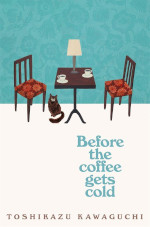 |
Before the Coffee Gets Cold by Toshikazu Kawaguchi
A modern time travel fairytale in which, rather than leaving anything unsaid, the author hammers everything home ad nauseum – never has the characters simply do something when they could first think about doing it, say they’re going to do it, get confused by a not especially cryptic thing someone says, repeat back a word in a bewildered manner, have an existential crisis, think some more, rinse and repeat. The level of fluff here makes the whole thing read like a rough first draft. Edited better, I think it could have been a passable – and much shorter – collection of interlinking short stories, but even then the characters and their motivations would come across as simplistic. Several of my clever book club friends disagree and so I will concede that there may be something here that I’m missing, but if so I’m thoroughly missing it – this is one of the very few times in my life (American Psycho being another example, for different reasons) that I’ve felt compelled to take breaks from reading a book because I was physically shaking with frustration at the way it’s written. |
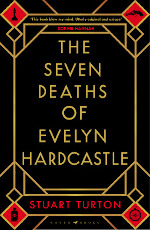 |
The Seven Deaths of Evelyn Hardcastle by Stuart Turton
A marvellous clockwork creation whose intricacy and style give me nice cosy David Mitchell thrills. A more obvious comparison, though, is to classic Agatha Christie, as the setting is an old country estate populated by arrogant gentlemen, tragic young ladies, downtrodden servants, eccentric doctors with giant moustaches, and various other archetypes, who are all, of course, keeping dark and dirty secrets from each other. We follow a poor soul who finds himself trapped in a time loop in this place, switching bodies every time he sleeps, trying to solve a murder while also trying to remember who he is and how he ended up there. If you can’t tell, it’s the sort of story where you might need one of those pinboards with strings all over it just to keep track of everything while you read – I definitely got lost a few times, but the narrator was patient enough to lead me through the uncertainty to a largely satisfying conclusion. The style shows a clear love of the genre and incorporates a lot of neat and evocative little verbal tricks without being too show-offy. And I don’t think it’s too much of a spoiler to say that the world hinted at beyond the grounds of Blackheath, vague though it is, is enticing enough to make me yearn for more in the same universe, though perhaps such a novel conjuring trick as this would lose its magic if repeated. |
I also read The Testaments by Margaret Atwood, but I can’t find any of my notes about it, and I don’t really remember it well enough to write an informed review at this point. All I can say for now is that it was good and interesting but probably not as essential as The Handmaid’s Tale. When I reread it (or find my notes), I will write something that hopefully does it a bit more justice.
Books I started but haven’t finished yet, but will have to finish some day because that’s just the way my brain works: The Secret Commonwealth by Philip Pullman, To The Lighthouse by Virginia Woolf, The Silence of the Girls by Pat Barker, The Night Circus by Erin Morgenstern, and probably more I’m forgetting.