August-October 2013 reading

A Study in Scarlet A Study in Scarlet by Arthur Conan Doyle

I had read this already, but happily revisited it for the book club my friends just started. It is a good read, and a great introduction to the character of Sherlock Holmes, though if you’re used to more modern mysteries it may flummox you just because it breaks some of the rules that would later be established in the genre – for example, certain elements that would be crucial to untangling the mystery aren’t introduced until quite late in the book. But the nicely detailed and methodical description of the crime scene lets us feel as though we could work it all out if only we were as clever as Holmes, and the solution, when it comes, is elegant and satisfying. Compared to that of other books from the same period, the language is extremely accessible, and the series is definitely worth reading if you like the modern BBC adaptation of Sherlock, especially since the first episode of that kinda misses the point of the method of murder in this book.

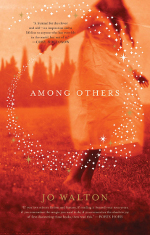
Among Others Among Others by Jo Walton

Often I’m annoyed by fantasy stories that give us the option of believing all their impossible events take place only in one young character’s head – the sideways wink, that cheeky “oh, kids and their imaginations” thrown into children’s films as if the children watching aren’t going to notice. And even though this book is told in the form of a socially alienated 15-year-old’s diary, I didn’t really find myself suspecting that the fairies and magical events she describes were anything but real. Perhaps it’s because the way magic works is original and ingenious and beautifully integrated into the world – or perhaps it’s because the narrator is clever and likeable and odd in some very relatable ways, and I wanted to trust her. Also, along the way, she talks about a wide array of science fiction and fantasy books which, a little like the bibliography of 80s geekdom scattered throughout Ready Player One, might help people like me, who sometimes feel a bit out of the geek loop, to catch up.

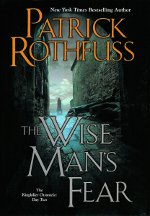
The Wise Man's Fear The Wise Man’s Fear by Patrick Rothfuss

Rather than starting with a bang, this book eases us back into Kvothe’s world quite slowly, but that’s okay. Aside from his wise and charismatic style and his brilliant world-building, much of Rothfuss’s skill is in wrapping us up in the day-to-day details of his protagonist’s life – stressing us out with his troubles, making us cheer whenever he wins some small victory over circumstance – until the fact that we’re not actually him seems entirely irrelevant. In that, it reminds me of nothing so much as Harry Potter. And the slow build-up more than pays off, as the latter half of the book is jam-packed with stunning imagery and moments to make you gasp out loud and prickle with goosebumps. If the third in the series lives up to the first two, The Kingkiller Chronicle will definitely join Harry Potter and His Dark Materials on the list of stories I go back to when I want to be taken on a fantastic journey away from my worldly troubles. Whatever it says about me, stories like these are among my favourite things.

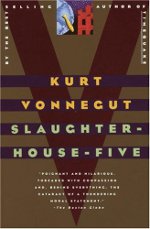
Slaughterhouse Five Slaughterhouse-Five by Kurt Vonnegut

Vonnegut certainly does know his way around a weird sentence – I learned that much from Sirens of Titan. But in other ways, Sirens didn’t prepare me for this book. Rather than being a funny, occasionally melancholic philosophical romp, Slaughterhouse-Five is tight and sharp and crisp and deranged and brutal – merciless in its quest to hammer home the horrors of life in general and war in particular, chilling in its amused detachment from these horrors. But it wouldn’t be half as powerful without this detachment. Rather than moralising, it peppers us with short little bullets of humour and horror, and after a while it becomes disturbingly hard to tell which is which. Don’t read it unless you’re in the mood to think about death for a while. But you probably should read it at some point.

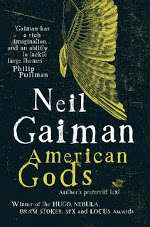
American Gods American Gods by Neil Gaiman

I’m pretty sure I’m a person who should have been reading Neil Gaiman for years, but somehow I’ve only just got round to him. He’s one of those writers who crams an intimidating number of ideas into a small space, casually glancing off concepts which in other hands would be whole books of their own. American Gods is a weird one, though. I certainly enjoyed the American part – the slightly unsettling small towns, the tacky tourist attractions, the road movie flavour of it all. But I found the Gods part a bit baffling, to be honest. Almost every character speaks in riddles, and even the appropriately named shadowy protagonist doesn’t often stop to question the barrage of barely explained insanity that confronts him at every turn. The ending, especially, gets a bit metaphorical for my tastes, as physical reality fades into the background and people do all sorts of very symbolic-seeming things for no clear reason (don’t ask me why I let Murakami get away with it). Maybe I don’t know enough mythology to untangle it all, or maybe this book is just for people cleverer than me. I’m happy to confirm that Neil Gaiman is definitely one of those people.

April-July 2013 reading

More ramblings about books! A few more than usual this time, but that’s because most were quite short and a bit on the pulpy side. Sorry English degree – I’ll try to read something big and literary soon, I promise!

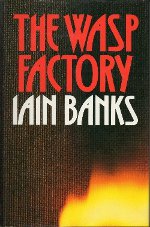
The Wasp Factory The Wasp Factory by Iain Banks

Be warned, this is the sort of book they’d make you read in high school, and if you’re me you wouldn’t get it at all because it didn’t intersect much with your naive little world – one of those books where everything is almost comically effed up and depressing, and everyone plays their part in a cycle of cruelty, weakness and appallingly bad parenting. But now, as a sort-of adult, I appreciate it more. The most impressive thing is perhaps that it makes the psychotic, misogynistic, animal-torturing protagonist more comprehensible to us than the apathetic world around him. Stick around for: a final chapter that could serve as the subject of a million essays featuring the word “problematic”, and a brilliantly unpleasant account of being drunk.

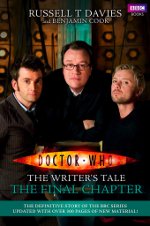
The Writer's Tale Doctor Who: The Writer’s Tale: The Final Chapter by Russell T Davies and Benjamin Cook

Now, don’t get me wrong, I love the Steven Moffat era of Doctor Who more than I love myself – quite a lot more, in fact – but I still think Russell T Davies was quite underappreciated by fans. Not only was it his passion that revived the show back in 2005, he established a level of quality that was by no means assured before that point, but which people almost immediately began to take for granted. This book, through a series of informal and brutally honest letters, documents his writing process during his last couple of years as showrunner, and for aspiring writers it’s funny, familiar, terrifying and reassuring all at the same time. It certainly makes me feel better about my own procrastination, although on balance I suppose that might not be a good thing.

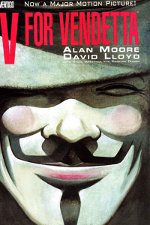
V For Vendetta V For Vendetta by Alan Moore and David Lloyd

I’ve never read enough comics to fully adapt to them, so I tend to find them disconcerting and hard to follow. To try and fix this, I thought I’d try something I’d already seen the film of, and which also happens to be in one of my favourite genres. Like many dystopian visions, V For Vendetta shares a lot with Nineteen Eighty-Four, though being newer it is more creepily tuned in to the specifics of modern Britain. The characters are largely caricatures who play out clashes between ideologies: fascism, anarchy, justice, chaos, etc. It’s also deeply intertextual – it plays with quotations and scraps of philosophy, and is already making its own mark on the world. I really enjoyed it – it makes me want to read more comics, and just read more in general so I can appreciate its references. I did like the Faraway Tree stuff though. See, there’s something for all mental ages here!

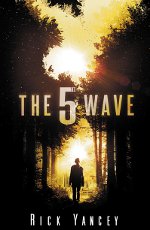
The 5th Wave The 5th Wave by Rick Yancey

I was unsure about this book from the first few chapters, as me and the main protagonist got off on the wrong foot, and sadly our relationship never fully recovered. The setting is ridiculously bleak, existing at some dark intersection between The War of the Worlds, The Walking Dead, and everyone you ever loved dying horribly. The story, meanwhile, is a cocktail of various Young Adult flavours, notably The Hunger Games (as the teenage protagonist stumbles from one gritty, back-to-basics survival situation to the next), and Twilight (as she gets all gooey over a mysterious but hot guy who may or may not want to kill her – has the whole of society just decided that that’s how love works now?). The story does have some moments of real cleverness, but they weren’t quite enough to hold my interest. Anyway, I won’t try to pass off my distaste as some sort of insight; it just didn’t really click for me.

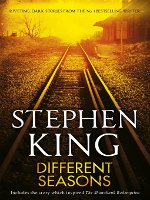
Different Seasons Different Seasons by Stephen King

Stephen King feels like a storyteller who always knows what he’s doing, in a way that confounds and intimidates me greatly. All the stories in this collection of four are fascinating – they aren’t really classed as horror stories, but there is certainly something to horrify in each one of them. ‘The Body’ was the highlight for me: it explores the connections between childhood and adulthood, and the distinct strangeness of both worlds. The adventure the main four characters go on very much captures the odd mixture of images, both nostalgic and disturbing, that come with memories of childhood – it’s kinda like the prose equivalent of Boards of Canada’s Music Has The Right To Children. The story that was adapted into The Shawshank Redemption is another highlight, and a masterclass in character building to which I’m sure I will return frequently.

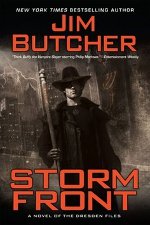
Storm Front Storm Front by Jim Butcher

One of those troubling books where the author was younger than me when he wrote it. I was constantly on the lookout for clues to this fact to make myself feel better, but sadly this is a very well structured and enjoyable urban fantasy detective noir thriller thingy. It grips you through the old technique of piling problems upon problems, never resolving one without introducing two more. Poor old yer-a-wizard-Harry Dresden is never allowed a pause for breath without being bludgeoned with a blunt object or attacked by a demon or pounced upon by one of the book’s many femme fatales, so the pace is always fast and pleasingly silly. And you can feel the author setting up a world fit for the many sequels the book already has – it’s one of those series that it’s nice to know is there in case I need something pulpy and fun to binge on.

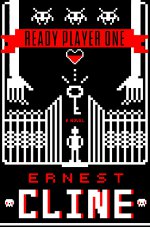
Ready Player One Ready Player One by Ernest Cline

A book about escaping from a ruined world into a virtual easter-egg hunt created by an eccentric dead billionaire obsessed with 80s geek culture … and if that sounds like the ultimate piece of escapism for nerds, that’s because it pretty much is. But as much as that description appeals to me, it still feels like it does a disservice to the tight structure and vivid imagination of this book. There’s a real sense of adventure here, of danger, wonder and magic – a tone somewhere between Charlie and the Chocolate Factory and The Hunger Games, if that makes any sense at all, which it really doesn’t seem to when I put it like that. Trust me, it’s great. And it’s such a massively joyful and unapologetic celebration of geek culture that even I, as someone who often feels too weird and awkward to even be a proper part of the geek community, was practically hyperventilating at certain points. In a good way.

(Oh yeah, I also read Reunited in Death and A Reformed Character, the second and third books in the Pitkirtly series by Cecilia Peartree, but as the author’s son I don’t really feel qualified to write critically about them. But in my biased opinion, they are good and funny and you should read them.)

Late 2012 – early 2013 reading

Reading! It’s hard to get a lot of it done when you’re also writing a novel. I suspect this is partly evolution’s fault. Over the last few thousand years it could have been preparing us to stare at electronic screens all day, decoding long sequences of symbols and putting new sequences together in slightly different configurations that might hopefully convey meaning to someone, somewhere, some day. But instead it was teaching us to forage for berries, spear sabre-toothed tigers and shiver in caves scraping bits of metal together over piles of sticks. What use are those skills in today’s job market, evolution?! Anyway, in defiance of my ancestors’ way of life, I’ve been forcing myself to make time to read, and that’s good because it means I read some lovely books like these:

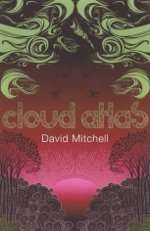
Cloud Atlas Cloud Atlas by David Mitchell

It’s hard to describe this book without descending into metaphor: it’s a rollercoaster that spends half its duration cranking you to the top and the latter half plunging you back to earth! It’s a beautiful Rubik’s cube with so many moving parts it may never truly be solved! It’s … okay, if you want to be a literal Linda about it, it’s a series of tangentially connected stories told with amazing skill in various styles, but it can feel very much like those first two things I said. If you’re not used to 19th century adventure stories, the first section might feel a little slow, but it gets more accessible to modern audiences as it goes along. The mystery grows as the layers are pulled back, until the merest hint of a connection between the narratives can set your spine a-tinglin’. If you’re like me you’ll reach the end with the uncomfortable sense that you’ve just read six better books than you’ll ever write, tempered only by the desire to read it again and spot more clues. If that’s not enough for you, it contains a hilariously and depressingly accurate account of travelling by train in Britain.

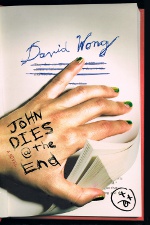
John Dies at the End John Dies at the End by David Wong

This book is a comical sci-fi horror … thingumy which proves that humour does not have to come at the expense of things like tension, empathy, poignancy and fear, and can in fact heighten them. Much of what transpires is disarmingly silly. Supernatural forces are painted as immature teenagers with a destructive streak, but this makes them somehow more terrifying than the solemn and restrained phantoms of most horror stories. The eponymous John is one of the most memorable characters I’ve read lately, mostly because he seems like exactly the sort of person you’d have gone to high school with – almost too ridiculous to be made up. It can also be so politically incorrect that it seems pointless to even point it out – in that way, and in its grotesque imagination, it reminds me more of South Park than of anything else. South Park mixed with a cheap B-movie mixed with Douglas Adams mixed with god-knows-what. I feel like either I or David Wong (probably me, to be honest) slightly lost the plot somewhere in the middle, but I certainly enjoyed it enough to stick the sequel (This Book is Full of Spiders) on my reading list.

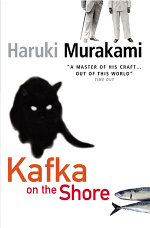
Kafka on the Shore Kafka on the Shore by Haruki Murakami

After reading The Wind-up Bird Chronicle, I knew I had to go back to Murakami at some point, as he’s one of the few writers who genuinely inspires me to paint pictures in my head of the things he describes, as readers seem to be expected to but I rarely do. Kafka on the Shore recounts two cryptically interlinked stories: the vaguely Oedipal tale of a teenage runaway, and the strange adventures of an even stranger old man. It shares certain elements with Wind-up Bird: awkward sex, lost cats, surreal vision quests and bizarre events from the past whose consequences echo to the present. In a certain frame of mind – if I were trying to write an essay on the book, say – I might find the muddling of metaphor and reality frustrating. Even reading it for pleasure, the art-sceptical part of my brain sometimes chimes in “What does any of this mean? It’s just a load of random weird stuff happening. I could write this” before the rest of my brain sardonically responds “Oh yeah? And it would be this beautiful and disturbing and downright hypnotic, would it? Now shoosh and enjoy the ride.”

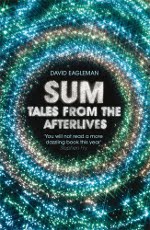
Sum: Tales from the Afterlives Sum: Tales from the Afterlives by David Eagleman

A book I happened to pick up because it was 99p on Kindle, and I’m glad I did. It’s a series of short stories detailing different imagined afterlives. Few of them involve us being judged by the criteria of any existing religion; instead there is an implied new religion to be found embedded in each story. In other words, we could choose to live our lives based on the assumption that any one of these accounts is true; if we believe ‘Metamorphosis’, for example, we may want to spend the latter years of our lives systematically erasing all evidence that we ever existed. If you think you have a good sci-fi idea tucked away in your brain, it’s worth reading this book just to see if David Eagleman has already written about it. Damn you ‘Conservation’! (On a related note, here is another thought-provoking afterlife story, which seems to do the rounds on the internet every so often.)

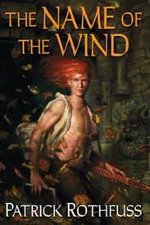
The Name of the Wind The Name of the Wind by Patrick Rothfuss

I’d heard such good things about this book that I couldn’t resist picking it up, despite my fear of reading straight fantasy in case it shows up my own novel. As I feared, there are certain sections that make me go “Awww, that’s sort of like that bit in my book, but way better”; at points Patrick Rothfuss seems to be taking us on a tour of fantasy tropes, going “This is how you do this one well, this is how you make this one interesting”. In some ways the setting feels like a pretty traditional fantasy world, albeit very well realised and rich in cultural detail. One thing that sets it apart is sympathy, a magic system that’s unique in that it … well, it almost makes sense. Unlike the handily vague fireball-flinging nonsense in a lot of fantasy novels (mine included), sympathy has rules which the reader is allowed to learn, so rather than feeling alienated when the protagonist pulls off a particularly badass piece of binding, you say “Ohhh, that was clever, well done!” It’s a great fun book, but if you’re the impatient sort, bear in mind that it is the first of a trilogy that is not yet finished and leaves many a loose end dangling provocatively in your face.

Snails, Sirens, Scary Paintings, Singing Kettles

For this post I’m going to try out more of a journal format. Instead of rambling on for ages about one thing, I’ll ramble briefly about a bunch of fairly unrelated things. If it turns out too disjointed and pointless I won’t do it again – just mixing things up because that’s the kind of crazy guy I am.

I’ve been working on Project Snails for three solid weeks! Go me! After a rocky end to last year, I had an equally boulderesque start to this one – was still recovering from Project Ho Ho Ho and writing the credits song for it which took way longer than it should have – but when I finally got my butt in gear and placed it on a chair in front of a computer with my novel open on it, I found a burst of creativity waiting for me. That’s the upside of taking an extended break from something, I suppose. When you immerse yourself so fully in a project, your unconscious carries on working even when you think you’re doing something else.

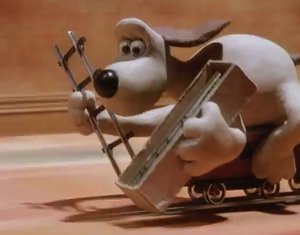
AaaaahhhI’m now at 95,000 words in the latest draft. 100,000 is what I’m thinking of as the halfway mark, though considering how brutally I’ve been cutting stuff during this rewrite, I’ve probably passed the true halfway mark already. Everything’s going pretty well, though one major storyline is having to be so severely reimagined as I go that I feel as if I’m laying down railway track in front of a moving train à la Gromit in The Wrong Trousers. Also, I’m using Scrivener now. It’s pretty good, especially if you have lots of different chapters and drafts which you want to be able to quickly switch between and view side by side. Which I do.
The Sirens of TitanI’m not reading enough. As I’ve mentioned before, writing does this to me. The only book I’ve finished since my last book post is The Sirens of Titan by Kurt Vonnegut, so I might as well talk about that now. Having grown up ingesting The Hitch-Hiker’s Guide to the Galaxy in various forms, it’s hard not to read Sirens as a sort of precursor: wry science fiction (wryence fiction) where dysfunctional people get whisked off to various planets and moons and put in vaguely absurd situations by forces outside their control. In the process it captures some of the random, chaotic, weird beauty of life. Breathtaking imagination is on display, in for example the descriptions of the creatures that live on Mercury, and of the being called Salo; these passages ought to make most writers – myself included and emphasised – slightly ashamed of their own lack of imagination. Also, it’s nice to finally know what my parents were talking about when they used to go on about chronosynclastic infundibula. Nerds.
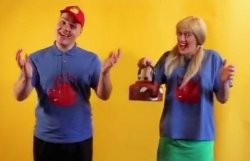
I’m watching the first season of In Treatment. If you haven’t heard of it, it’s a show which is set almost exclusively within the therapy sessions of several different people. The characters seem so real that it feels almost wrong to be spying on them at their most vulnerable, as the show invites us to. Its more intense episodes can leave you numb and in dire need of a hug. But your investment in the characters’ progress and the weekday-based episode structure draws you back. The music is great too.

I had an incredibly unsettling dream last week. It was framed as a trailer for a horror film, though I was actually experiencing it rather than watching it. I was wandering round an underground art gallery which seemed to have no exits but was quite full of people. All the paintings were fairly normal except for this creepy painting in one room which was of a woman with a messed up face (either she had a freakishly oversized mouth or there was just a hole where her face should be). Gentle, sad classical music was playing in the gallery but whenever I looked at the creepy painting it changed to disturbing, chaotic, dissonant strings. I tried to avoid looking at the painting, but as I walked around I kept hearing the music change as the painting entered my peripheral vision. After a while, bad things started to happen – people in the room with the painting started dying, other paintings started to change – but I don’t remember many more details. The strangest thing was that the dream didn’t scare me that much at the time – as it was a trailer, I was more impressed by its scariness than scared by it – but the more I thought about the dream the following day, the more it freaked me out. Posting it here in the hopes of exorcising it from my mind, so apologies if it latches on to yours.

Our Singing Kettle spoofThe actual Singing Kettle people apparently saw our dirty Singing Kettle parody. This was mentioned in a recent issue of the Scottish Sun (the article is also online but I won’t link to it because I feel icky enough just being mentioned in a tabloid). The main emotions this conjures up are the customary shock and disbelief that come with my stupid little world making momentary contact with the larger, real world, and some to-be-expected traces of shame. At least they were nice enough to laugh it off, so we can probably stop worrying about being sued now!

Good housekeeping

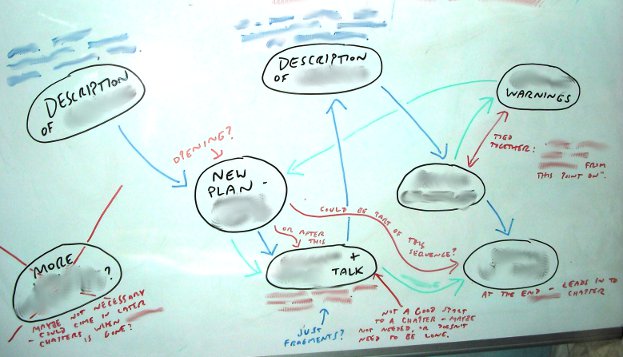
If you are a writer and you own a whiteboard, at some point you inevitably end up with something like this:

White board nonsense
If you want to find out some secret details about Project Snails, feel free to do some CSI-style image enhancement on the blurred out areas here!

This is a diagram to help me rethink one particularly troublesome chapter in part two of my novel. I’m finding that the most troublesome chapters are the ones without a central nucleus to hold them together. If something major happens in a chapter, it’s fairly easy to structure. You know where the meat of your chapter is, and arranging the more minor points around the edges isn’t too much of a challenge.

But then there are “housekeeping chapters”, where all you have is a bunch of small but essential things you need to get done. For example, you need to build up the relationship between two characters, you need to describe the place they are passing through, you need to reveal a bit of someone’s backstory, and you need to get a certain object into someone’s possession. How can you make these things flow into each other and feel like a coherent whole? What should come first? How can you best end the chapter in a way that fools the reader into thinking something meaningful has happened?

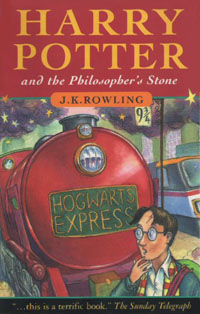
Harry Potter and the Philosopher's StoneOne of the ingenious things about Harry Potter (and there are many) is that there are very few housekeeping chapters, at least in the early books. If you go back and flick through Philosopher’s Stone (I know you have it, don’t lie to me) and look at the chapter names, I guarantee you’ll audibly go “Wow, this is a veritable treasure trove of stuff!” Pretty much every chapter has a strong central concept – some major event or new element of the wizarding world that we’re being introduced to. Maybe it’s just because everything has become so iconic now, but for flip’s sake: we go from meeting Hagrid to visiting Diagon Alley to travelling on the Hogwarts Express to being sorted by the Sorting Hat to meeting Snape … I say we because that’s who it feels as if it’s all happening to, and I don’t have a bloody clue how she does that … oh god, I so want to go and reread Harry Potter now.
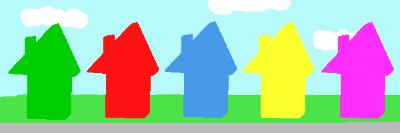
Anyway, what was I talking about? Oh yeah. Housekeeping chapters. Ultimately I should probably try to purge them from my book, or at least make them feel less like housekeeping chapters, but for now I’m struggling just to give them a coherent structure. There’s a lot of “Well, this needs to happen before this, but a bit of time needs to pass between that and that, and if that happens before this then I’ll have to cut that bit out, unless I move this other thing to an earlier chapter… aaargh! Okay, that’s it, I’m getting out my whiteboard!” It becomes like one of these logic puzzles:

Houses from left to right: green, red, blue, yellow, purple
This is Puzzle Street. For some reason only one person lives in each house, except for one of the houses which has been empty since its owner was killed in a tragic cryptic crossword accident. Some facts about the street’s current occupants: Bob got sick of all the stupid puns about him living in a green house (example: “What’s it like living in a green house, Bob? It must get hot in there during the summer!”), so he swapped houses with Alison, who lived at the opposite end of the street. Todd likes to spy on Alison in the shower, but she lives two doors away, so he has to borrow binoculars from Jane who lives next door to him. Sometimes Jane’s other next door neighbour sees Todd borrowing the binoculars, but she’s too busy wondering where her next fix is going to come from to think anything of it. Which is the empty house? Have fun! (Clue: IT’S THE YELLOW ONE.)

And this doesn’t just happen within individual chapters. You can end up shuffling the order of chapters around, and that gets even messier – especially if, like me, you switch between viewpoints and the idea of putting two chapters told by the same character next to each other makes your toes curl in abject disgust. That’s when you find yourself walking past stationery shops and thinking “Hmm, maybe I should get some Post-it notes, they’d make this whole process less painful”. And before you know it, you’re waking up in the stock room of W H Smith, high on highlighter fumes and covered in Pukka Pads filled with scribbled plot points and character arcs.

And after all this is sorted out, you discover that while you’ve been focusing all your attention on how to logically progress your story from point A to point B, your characters have turned to cardboard and your style now consists exclusively of sentences like “the man walked through the door”. Time for another rewrite, and time to uncover another set of deep structural problems with your story! Yay! Writing is such a joyful cycle.

June-July 2012 reading

I haven’t been reading as much as I should lately, but it’s fun to write these posts, so write one I shall! (Why is it acceptable to use Yoda-style grammar in that context? And why do I, as a supposed English graduate, have no better term for it than “Yoda-style grammar”? Some questions have no answers.)

Catching Fire cover Mockingjay cover Catching Fire and Mockingjay by Suzanne Collins

The thing I’m most jealous of about the Hunger Games trilogy (aside from it making loads of money) is Collins’s talent for creating powerful symbols and visual moments. These books deal a lot with appearances, performance, even fashion, and the influence these things might have. They also do an admirable job of portraying the darkness of the world while retaining faith in humanity. I sort of wish I’d read this series in time to include it in my dissertation, as it’s a very well-crafted dystopia.

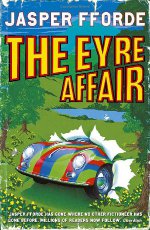
The Eyre Affair cover The Eyre Affair by Jasper Fforde

I’m not sure I have the vocabulary to talk about this book, because it’s really unique, in a wish-I’d-thought-of-that way. It’s set in an alternate version of our world, distinguished by casually deployed science fiction elements and amusing differences in its culture’s priorities. In terms of tone it veers from a Monty Python-ish blending of surrealism and satire to Terry Pratchett-esque fantasy to one of those cosy detective stories where people knit and eat Hobnobs and have names like Marmalade Jones. I won’t spoil too much, as it’s a fun rollercoaster – especially if you happen to have studied literature. Also a good antidote to Hunger Games-induced depression.

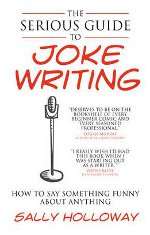
The Serious Guide to Joke Writing by Sally Holloway

I don’t often like books on how to write: for one thing they usually raise the childish question “If you’re so bloody good at writing, why is this the only book I’ve heard of by you?” But since I’m supposed to be writing sketches for the Beyond Studios Advent Calendar, I thought I’d better at least try to learn to be funny. We’ll see if I succeed, but regardless, I found this book a lot of fun to read. Most useful are the exercises Holloway provides which theoretically allow you to write jokes on any subject – and as she points out, however many bad jokes you come up with, you only need to use the good ones. For example, here’s one it helped me come up with: “Why is a settee called a settee? Because when you sit on it, you’re the sitter and it’s the sittee.” Okay, that one might need a bit of work…

May 2012 reading

I like reading! To prove it, here’s some spraff about the books I’ve read this month:

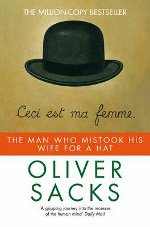
The Man Who Mistook His Wife for a Hat by Oliver Sacks

I’d heard Oliver Sacks on Radiolab (a great podcast about science and brains and stuff – if you haven’t heard it it’s like having liquid epiphanies poured into your ears), and decided to get this book as part of my vague plan to dig a little deeper into things that interest me. The book recounts a bunch of cases involving people’s brains behaving in unusual ways – failing to process sensory data properly, rejecting the memories of events minutes after they happen, even granting their owners the ability to do seemingly impossible things like instantly identify whether massive numbers are primes or not. It’s accessible and fascinating, and makes you think about how much we take for granted, but also how much of that can be taken away while still leaving something to live for.

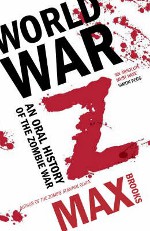
World War Z by Max Brooks

Zombie fiction is kinda strange. From my limited exposure to it, I get the sense that works like The Walking Dead, Shaun of the Dead, Left 4 Dead and other things ending in Dead are not just about a zombie epidemic – they’re about the zombie epidemic. It’s like we’ve all agreed it’s going to happen at some point, and a bunch of people are writing stories that slot right into it: historical fiction for a made-up history. This book provides a seemingly exhaustive collection of well-thought-out personal and political stories that span the globe. I really hope that in the film adaptation, the protagonist is still humanity as a whole – that would be a lot more interesting than one handsome white American battling his way through zombies to reunite with his family.

House of Leaves by Mark Z. Danielewski

It’s immediately obvious to those of us who like to flick through books before reading them to get the lay of the land that this is an unusual book. So I approached it like Clarice approaching Hannibal Lecter, knowing it was going to try to screw with my mind. It’s just a bunch of words on pages, I told myself! Then I got to page 26 and decided “Okay, this can be my daytime book”. Despite the fact that it’s undeniably inventive and creepy, I’m not totally sure I like House of Leaves. This may be down to unfortunate timing: certain passages felt like a slog as they reminded me a little too much of reading impenetrably endless theory for my recently finished English degree. But if you’re patient and like weird things, this is certainly one of those.

A Game of Thrones by George R. R. Martin

I love fantasy. I don’t quite know why. It can take a little effort even to work out what’s fantasy about A Game of Thrones (a lot of the usual “fantasy” elements are confined to old stories and vague superstitions in Martin’s world), but for some reason the mere fact that it’s set in a history other than our own makes it massively more appealing to me. Already I feel bad that I know and care more about the power struggle between the Starks, Lannisters, Targaryens, Baratheons etc. than about most of real history. This book weaves together short, to-the-point sentences (which I could stand to learn from) into an intricate tapestry that’s consistently unpredictable and exciting. If you like the TV show and are wondering if it’s worth reading the book, my answer is an emphatic yep. If I gave out MoleThrower Book of the Month awards, this would win the one for May 2012. But I don’t, so it can’t. Sorry George. Ah, he’ll get over it.

Consumed by Snails – part two

Returning to Project Snails after four years apart from it is a strange experience. In some ways it feels like returning to one of those other lives we have, in different places with different people, that we occasionally switch between. Time doesn’t seem to have passed, and the life I was living without the novel – as recently as two weeks ago – seems like a dream. “What was that about?” asks my novel, and all I can do is smile self-deprecatingly and shrug. “University? You do do the strangest things sometimes, Alex. Heh! Do-do.” My novel isn’t very mature, you see.

In other ways, though, the passage of time – and, I’d like to think, some small amount of growing up on my part – becomes apparent when I read my past self’s writing. Happily, I seem to have gained at least some of the perspective that I hoped four years, and higher learning, would bring. Or academia has stifled my unique voice and snuffed out my creativity, leaving me tragically blind to my earlier genius. Either way, I can see flaws all over Snails.

There are passages that are clearly more about me being “clever” than about the story or the characters. Analogies are stretched to snapping point as past me tries to force in as many tenuous connections as possible between the literal and the metaphorical. Descriptions and dialogue that could comfortably be simple and straightforward are written in strange, roundabout ways just for the sake of it. There are bits where I as the author am the only person who could hope to guess what a character is really thinking. Some of the “emotional” scenes make me cringe, which generally isn’t the intended effect. There are blatant continuity errors, including character and place names changing from one chapter/sentence to the next. And there is a bit of unexplained weirdness surrounding certain subplots, which I was laying in there for the potential second novel, but which probably hurts the first novel more than is justified, considering it may well be the only novel.

But despite all this, I can’t help feeling there’s something there. Over the years I worked on it, characters developed and rebelled against their original one-dimensional selves, the world was infused with a fair amount of detail and history, and the story became intricate and multi-layered, with themes and subplots woven through it just subtly enough not to distract from the core story. All this work, taking place over multiple, evolving plans and drafts of the novel but now compressed into one draft, reminds me of why I should probably have some faith in my past self: there’s a lot more of him than there is of me.

The trouble is, as much as I love the characters, the world and the story, the writing just doesn’t live up to them.

That’s why I’m afraid of this book. It’s almost hypnotic. I can see the potential in what I have, but I know it’s going to take an insane amount of work to truly realise it. And not just work. It’ll take the sort of emotional investment that I haven’t made in anything for a long time. I’m going to have to think about parts of it until my brain goes numb, then force myself to un-numb it and carry on thinking. I’m going to have to wake up in the night again, terrified that that character’s storyline isn’t believable enough, or that this plot point doesn’t make sense since I changed that other thing. This stuff isn’t optional. Not if I want the novel to be as good as it can possibly be.

I’d forgotten all this. I was in denial for much of my time at university, thinking “These smaller projects are fun, maybe I don’t need to go back to my novel”. Now I realise how wrong I was. I was always going to have to go back, for better or worse. If I don’t, I’ll forever be wondering how it would have turned out. Maybe it’s still just a 12-year-old’s naïve fantasy. But I have to know.

So I’m going to rewrite Project Snails. I’m not going to plunge in straight away, as I’d like to get some of my smaller projects done, or at least further along, before I make it my main focus. But at some point, I feel sure, it’s going to consume me again. I just hope it gets all the nutrients it needs from me to grow into something special, and that I’m still vaguely alive when it spits me out.

See, there’s one of those overstretched analogies I was talking about! Better make sure I edit my novel better than I edit this blog.

Consumed by Snails – part one

Oh yeah, Project Snails. Heh. Well. Yeah. Hmm.

In order to make this blog post suitably epic, allow me to take you back to my childhood – not the extended childhood I’m living now, but my actual childhood. I was a writer from a very young age, you see… (Wavy visual transition accompanied by harp scales.)

I think the first “novel” I ever wrote was The Thinking Tunnel (it feels weird to italicise that, but my university training demands it), a shameless rip-off of Enid Blyton’s Faraway Tree books, which filled my young mind with wonder and with which I was obsessed for several years. This was followed by a book called The Red Water World Mystery, a more traditional fantasy tale starring me as a version of myself who found a passage into a magical world while staying in a caravan park. Then came Super Bubble Mix, two kids’ sprawling adventures through space and time, almost certainly inspired by The Hitchhiker’s Guide to the Galaxy. These three books were about what you would expect from a child: containing the kind of imaginative ideas that insipid adult minds would automatically reject, but largely derivative, improvisational to the point of utter meaninglessness, and of course very embarrassing to look back on.

By the time I finished Super Bubble Mix, I was about twelve, and beginning to realise my flaws. That’s when I started working on Snails. All I knew was that it would be a new fantasy novel, an epic one, with adventures and magic and battles and arduous journeys across hostile terrain. Needless to say, it was quite directionless at first, and I wrote dozens of opening paragraphs, none of them leading anywhere. Eventually I came up with three characters and started them on a journey that seemed to have some momentum.

I wrote about eight lengthy chapters, but the story was still going nowhere. I started again. One unexpected benefit of this false start was that I now felt I knew several of my characters, and had a vague sense of a world that I could build on. Of course, the characters and world evolved dramatically later, but at least I had a starting point. The eight scrapped chapters had acted as a rehearsal – or perhaps more accurately an audition – for a set of five or six characters (though mainly the central three), and they got the parts. I just needed to write them a good story.

Inspiration struck one day at my granny’s house in Dundee. An idea for a pivotal moment in the story suddenly occurred to me, and I sat in the chilly guest bedroom for a long while, scribbling down a plot summary onto four sheets of A4 paper. The plot has changed a lot since, but these four pages were the structure that allowed me to begin writing the book properly.

Several years later, I completed a draft. There had been many hiccups along the way, including one detour which took me so far off course that I had to completely scrap a large section of the book and write it again, setting it in an entirely different place with a different set of secondary characters. I then began the process I referred to as The Great Revision. I did several major rewrites, gradually becoming more confident in my work.

In this time the novel became my world, the thing I could pour myself into. Almost every walk, car/train journey or quiet moment was a chance to mull over the story and come up with new ideas about where it could go, how this character would behave, why she might do that. I began treating it as more than another silly fantasy diversion; it became more or less the only way I expressed myself. As such, working on it induced heart-pounding excitement when it was going well and total abject misery when I lost faith in it. For a long time I tried not to put too much of myself into other creative projects, because I was saving it all up for Snails.

Then university came along, and, out of necessity, I stopped thinking about my novel for four years.

Earlier this week, I looked at it properly for the first time since 2008. In the last few days I’ve been scouring my old computer, doing a little detective work, copying and pasting from several different documents to try and assemble what is, for now, the definitive, up-to-date version of Project Snails. Sure enough, it is a novel, with a beginning, a middle and an end. It has 200,375 words, divided into 81 chapters and covering 345 A4 pages. And it terrifies me.

To be continued…

Some books by people who aren’t me

I was going to talk about Project Snails, but that post is taking a while to write – appropriately, as you’ll see. So in the meantime I’ll talk about creative things by other people. I think I’ve earned that right after my unexpectedly on-topic first week of blogging. (Don’t get used to it.)

Being able to read for pleasure again is a breath of fresh air. Not that I didn’t enjoy a lot of the books I read for my degree, but I could never fully immerse myself in them; part of me was always standing a little to the side, wearing a lab coat and jotting down observations.

I don’t think I’ll ever entirely be rid of that side of me, but that’s okay. I was a terribly uncritical reader before university, and it’s good to pause and think about what you’re reading rather than just pass straight through it like a bored tourist wandering a museum out of a sense of obligation, taking in words/exhibits and forgetting them just as quickly. I think I’ve found a nice balance now.

Here are some books I’ve read since classes ended:

The Hunger Games cover. The Hunger Games by Suzanne Collins

Since it’s the big young adult thing at the moment, and I have an unhealthy love of dystopias, it seemed to make sense to read this. It has some very Harry Potter-esque characters (specifically Haymitch and Effie), and a few (thankfully vague) similarities to the novel I’ve been writing for years. Most of all, though, it reminds me of the creepingly delightful Wind on Fire trilogy by William Nicholson, which portrays an equally brutal world where just because you’re young and innocent doesn’t mean you won’t at some point find yourself being burned alive. Does it say bad things about me that I enjoy this kind of book? Probably. I guess that’s part of the scary thing: you’re always secretly thinking “I’d totally watch the actual Hunger Games if they were on”. No? Just me then? Oh dear.

The Wind-up Bird Chronicle cover. The Wind-up Bird Chronicle by Haruki Murakami

I don’t really know how to talk about this one, since no framework I’ve tried to slot it into has really helped me make sense of it. I’m sure people who read a lot of post-post-modern books (or whatever level we’re at now) would scoff at me for my lack of understanding. But I don’t think you have to have studied English to appreciate it in these ways: it’s poetic, it’s evocative, it’s intriguing, it’s addictive, and it’s unlike almost everything else. In some ways it feels like dozens – if not hundreds – of strange intersecting short stories. If the part of your brain that asks awkward questions like “What’s going on? Is this real, or a dream? What was the point of that bit?” ever takes an evening off, that might be a good time to give this book a chance.

Crime in the Community cover. Crime in the Community by Cecilia Peartree

Full disclosure: this one was written by my mum. This means it’s hard to be objective, but I found it fun and surprising. It’s rather strange to venture into a world created by someone you think you know incredibly well, and find things there that it didn’t occur to you that they ever thought about. Along with things, of course, that seem completely in character, like frustration with authority figures and dysfunctional children (uh-oh). As well as a subtly unfolding mystery, this book is a catalogue of observations about people, many of them very funny. You can find it on the Kindle store for free, though it’s the first in a series, so be warned that it may act as a gateway drug to the world of Pitkirtly.