Reading: meteorites, shrinking alphabets, trolls & Noise

150-KnifeOfNeverLettingGo

bookstar

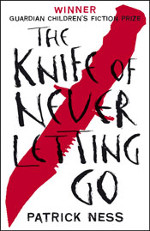
The Knife of Never Letting Go by Patrick Ness

Lent to me by a friend who wanted to correct the slightly negative impression I had of Patrick Ness following More Than This. And happily, it worked! I lost myself in this story in a way that’s upsettingly rare these days, but which took me right back to the fantasy books of my childhood. The world, beginning with Prentisstown (a primitive religious settlement where people’s thoughts are constantly audible to everyone else and girls are unheard of), is beautifully realised, the themes (empathy, gender, secrets, religion) are complicated and deftly handled, and the style is much more flavourful than the gritty but bland stream-of-consciousness of so much YA. There are some quietly beautiful moments, but overall it moves about as fast as a book can without making you forget the stakes — there is just enough time, at points, to go “phew, maybe things are finally going to be okay now — OH JESUS CHRIST”. I only hope the rest of the trilogy lives up to it, seeing as the twists and tension and emotion have already been cranked up to potentially unsustainable heights. But having seen now what this author can do, I’m hopeful.

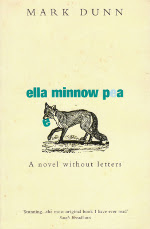
150-EllaMinnowPea Ella Minnow Pea by Mark Dunn

Ella Minnow Pea is set on a small island whose residents, for reasons too convoluted to go into here, find themselves having to express themselves in an ever-shrinking alphabet. As they do so, their classical letter-writing eloquence is replaced by a different sort of eloquence, as they bend language in all manner of creative ways to get around the new rules. This leads to some laugh-out-loud moments and genuinely ingenious constructions — and a funny sort of slasher movie thrill, as we anticipate which letter may be killed off next. While the island’s slide into tyranny is interesting (beginning with what seems a quirky and inconsequential ruling, ending with neighbours grassing on each other, Nineteen Eighty-Four style), there is not much of an emotional thread, and the ending is perhaps a bit too quick and neat to be entirely satisfying. Still, this is an enjoyable example of what a storyteller can do when s/he makes the very deliberate decision to discard realism – there’s a lot of cool stuff that can only be done without that millstone around your neck.

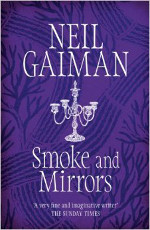
150-SmokeAndMirrors Smoke and Mirrors by Neil Gaiman

If there’s an unsettling way to blend the everyday and the mythical, Neil Gaiman has probably thought of it. Even his novels can read like short story collections sometimes, as he crams ideas into every available space until I can barely keep up with them all. So in some ways, an actual short story collection is an ideal format for him. The styles contained in Smoke and Mirrors are wildly diverse: there are stories written in iambic pentameter and other forms of verse; there are stories which achieve (for me at least) an almost T. S. Eliot level of incomprehensibility (I’m looking at you, ‘Cold Colours’). And then there are my favourites, which are essentially modern fairytales: ‘Troll Bridge’ and ‘The Goldfish Pool and Other Stories’ spring to my mind as highlights. Also worthy of note is the amount of disturbing, gruesome and sexual stuff going on in these pages, meaning you should only buy this book for your granny if your granny is exceptionally awesome. (In my case this book was a gift from an exceptionally awesome friend.)

150-AlexWoods

bookstar

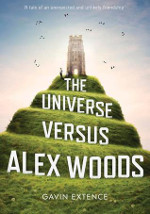
The Universe Versus Alex Woods by Gavin Extence

I thought the main character in The Mirror World of Melody Black reminded me of me, but that was before I met Alex Woods, who is almost scarily like me on a number of levels. He’s socially awkward! He’s called Alex! He has an unhealthily puritanical attitude towards alcohol and drugs! He’s self-deprecating and constantly bemused by situations! Okay, a lot of these attributes are fairly standard ‘nerdy kid’ tropes, but written in Gavin Extence’s wonderfully relatable style, they were quite striking to me. What I appreciate most of all is that this is a coming of age story that isn’t afraid not to check all the usual ‘coming of age’ boxes. Instead, it checks much more interesting boxes like ‘bonked on the head by a meteorite’ and ‘starts a Kurt Vonnegut book club’ and (here comes one of those scarily-like-me things) ‘is home-educated after dropping out of school due to bullying’. Ultimately it celebrates honesty, kindness, and all the strangeness and mystery of the universe. Which is nice. And it made me cry – which felt natural and familiar but on reflection I can’t remember the last book that did that.

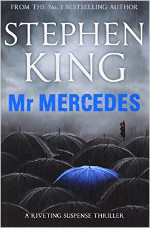
150-MrMercedes Mr Mercedes by Stephen King

I would have expected that when a writer as experienced and prolific as Stephen King gets his hands on a new genre, he would want to do something weird and different with it. But instead we get something that feels fairly by-the-numbers: Bill Hodges, a washed up ex-cop haunted by his past, receives a taunting message claiming to be from the Mercedes killer, one of the perps who got away. And of course he goes behind his department’s back in a desperate attempt to solve this one last case and give his life meaning again. The most disappointing thing is the portrayal of the villain, who feels like a grab-bag of psychopath cliches rather than a portrait of an actual human being. King never encourages us to feel what he is feeling, and we are therefore free to dismiss him as a horrible, racist, misogynistic monster. This not only feels like a wasted opportunity, limiting the story to being fairly hollow genre fiction, but it makes spending time in his company not particularly enjoyable. Okay, I’m sounding pretty negative here, but overall Mr Mercedes is a solid enough thriller, with that addictive cat-and-mouse dynamic that always keeps me turning the pages. Just don’t expect anything more.

You can find more of my rambly book paragraphs over on the Books I’ve Read page!
First draft fever

I’m giving myself an hour to write this post. That may seem like a long time, but I am a slow writer, a slow reader and an all-round slow thinker. I can easily spend the better part of a day carefully composing a blog post, or – as has happened a shameful number of times – write one in fits and starts over the course of several weeks, and quite possibly never finish it. So this is an attempt to speed myself up and, in the process, maybe find a sustainable way of updating this blog more than once in a blue moon.

This year, I’ve also adopted a similar approach when it comes to writing novels. After spending so many years painfully extracting The War of Undoing from my head like a troublesome tooth, I wanted to get on and hammer out something completely new to prove to myself that I could. So at the beginning of March (before I finalised TWOU, actually) I set myself the task of writing a first draft of a new, shortish (60,000 word) novel over the course of six weeks. This would mean writing 2,000 words a day and working 5 days a week. 2,000 words was right at the edge of my ability when I was rewriting The War of Undoing back in 2012, so this seemed ambitious but not impossible.

Two weeks later, I somehow finished the first draft of the new book – let’s call it Project Rose – having managed to churn out around 4,000 to 6,000 words a day, as well as working weekends. I was astonished at myself. I’d heard of people writing drafts that fast, but I never thought I was capable of doing so myself. In case you are interested, here are the tricks that I think helped me achieve this:

  1. I made the rule that I would not overthink what I was writing. This was a first draft, after all, and if I wrote something incredibly stupid and rubbish, no one ever had to know. So if a potentially stupid and rubbish idea came into my head, as long as it amused me, I would put it in anyway and worry about it later.
  2. Going against my natural inclination to tinker, I absolutely forbade myself from going back and making changes to bits I’d already written. If I changed my mind about a plot element or character, I would carry on writing AS IF I had made all the necessary changes earlier but without actually doing so, and make a note of the change so it could be implemented in a rewrite.
  3. I was working from a plan. Not a massively detailed plan, but a brief chapter-by-chapter outline and some more in-depth notes which I’d spent a couple of months gradually cobbling together. This meant that no matter how many weird tangents I found myself going off on, I could always look at the plan and go “oh right, I’ve got to do that now”, pick up the draft and set it down pointing vaguely in the right direction like you would a remote control car with an especially erratic remote control.

And with those helpful hints comes a rather large disclaimer: the draft didn’t turn out very well at all. I can say that confidently because I’ve spent the last few weeks trying to subject it to its first major rewrite, and even with care and attention it seems vehemently opposed to the notion of being good. The quality of the writing is wildly variable (thanks for that, trick #1), it’s riddled with inconsistencies (cheers, trick #2) and it goes out of its way to conform to the most ludicrous plot points even when it has to drag the characters along kicking and screaming in order to get there (oh, trick #3, you bastard). There are things about it that I like, but for now I think I’m going to do the classic writer thing of leaving it in its (metaphorical) drawer for a while longer, and see how it looks to an older, hopefully more mature me.

Did I mention I wrote another first draft in May and June? Yeah, a first draft of a completely separate book, this one based on Project Chippy, the aborted detective webseries I mentioned on this blog back in 2012 – let’s call its novel incarnation Project Fishy. I mostly used the same methods as I used back in March, though I got derailed a bit more along the way, by doubts, plot problems and such. I haven’t gone back and looked at that first draft yet, but I suspect I’ll find that it’s just as flawed as Project Rose.

But I’m liking writing these first drafts, even if they’re nowhere close to being in a fit state for anyone else to read. Having two first drafts sitting there awaiting my attention is a much better feeling than the one I had before, which was “oh god, once I publish The War of Undoing I’ll have nothing new on the go and I’ll probably never be able to write anything again”. I’ve at least proved myself wrong in the most literal sense there – I have written more stuff. It may not be good, but I have written more stuff. So nyah, unrelenting negative voice in my head. Plus, writing first drafts is much more measurable than fiddling with drafts you’ve already written. I can look back on 2015 so far and say “Look! There are 120,000 words that didn’t exist in that order before.” Whereas last year … well, let’s not talk about last year.

So I’ve decided to embrace this first draft fever and write another one, starting next week. Unlike the others, this one will be set in Kyland, and will be a sort of prequel, telling a story about the Raining children’s time living in Tarot before all the craziness of The War of Undoing happens. My codename for it is Project Hopeless, which may mean something to the two or so people who have read TWOU and actually remember world details. I’m probably going to use a slightly different system for writing this first draft, making more notes before each chapter to keep myself on track, but I’m sure whatever system I use will still lead to an avalanche of horrendous problems for my future self.

Actually, who cares? I have plenty of future selves, and it’ll only be a problem for some of them. I have a feeling the ones who are going to be writing this first draft are going to enjoy it very much. And that’s my hour nearly up, so I’d better stop typing before this turns into yet another novel. Blog at ya soon! (God, I really need a way to end these things.)

June-July 2015 reading

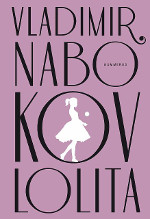
150-Lolita Lolita by Vladimir Nabokov

Despite the controversy surrounding this book, the thing that struck me most about it was how beautifully and inventively written it is – certainly enough to make me feel guilty about calling myself a writer, and more disturbingly, enough to calm the sense of moral outrage stirred up by some of the early chapters. Before long, we are swept along on a strange journey in the company of pubescent-girl-fancier Humbert Humbert, a man we would be unlikely to have the chance to get to know in real life, and probably wouldn’t want to. But in the safe realm of fiction, we become desensitised to his unique way of seeing the world, worn down by his poetic vocabulary and biting sense of humour. Like a lot of morally ambiguous books, it’s hard to boil it down to any sort of message other than: “people are people, and people are complicated”. But that’s a lesson worth learning more than a few times.

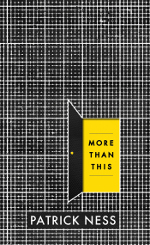
150-MoreThanThis More Than This by Patrick Ness

There’s a lot about More Than This that I can’t say, but this is how it starts: a boy drowns, then wakes up in a strange, deserted version of a place he used to know. If you’ve read survival-based YA books before you’ll have some idea of what to expect — cobbling together resources in a world of darkness and despair, a simple stream-of-consciousness style — but there is also an enticing sense of mystery to keep you turning the pages. For the first third or so I was desperate to know what was going on, but when it began to become clearer I struggled to find it convincing, and without the core of intrigue to hold it together, my appreciation for the book kind of disintegrated. There are things about it that are commendable (again, I can’t elaborate without spoiling things), but ultimately the style, the logic of the world and the vagueness of the central themes were too off-putting for me.

150-Saga Saga, volumes 1-4 by Brian K. Vaughan and Fiona Staples

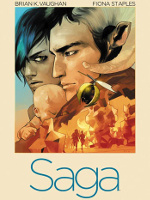
My friend Euan practically shoved Saga into my hands, and I’m glad he did. It’s a big, sprawling, colourful, funny sci-fi epic about two people from opposing sides of a war that has been “outsourced” to numerous planets and moons, who fall in love, have a baby and go on the run. Naturally the authorities from both sides see their love as the most dangerous thing in the entire battle-torn, explosion-riddled universe, and enlist some shady characters to hunt them down. So begins an ongoing rollercoaster filled with complicated, flawed characters, intelligent philosophical musings, and absolutely stunning artwork. In my quest for a theme I eventually settled on lost innocence: the newborn baby whose future self provides slightly jaded narration, the alien species that resemble Earth animals — these lend both humour and an odd pinch of melancholy to many scenes. Prudes’ note: these comics contain a fair bit of gruesome death and some moderately graphic sex, so if you’re squeamish you might run into a few scenes that cause you to … er, squeam, I guess.

150-TheMirrorWorldOfMelodyBlack The Mirror World of Melody Black by Gavin Extence

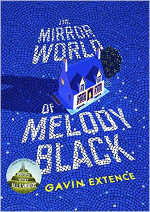
A book whose title made me think it was going to involve some manner of journey into a dark and unsettling parallel world — and it does, though in a psychological rather than fantastical way. The main character’s discovery of the body of her neighbour causes her to question the way modern humans live, beginning with a futile, all-too-familiar, insomnia-inspired online search for a cure to alienation. Before long she is disregarding the rules of polite society left, right and centre, and spiralling into depression. I can see some readers being put off by the subtle and oddly episodic nature of the story, but for me this is one of those cases where the narrator IS the book, and the narrator is memorable, complicated and just pretty great. Recommended at the very least for perpetually anxious, intermittently depressed misfits like me.

150-SkulduggeryPleasant Skulduggery Pleasant by Derek Landy

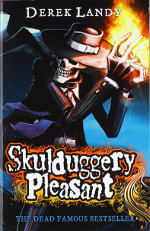
It’s been a while since I read a book aimed squarely at children, and I picked this up for a bit of light fantasy escapism (and because I was worried that my current novel featuring a walking skeleton might be ripping it off — seriously). It has definite shades of Neverwhere and of Harry Potter: magical things are going on behind the scenes of our world! Evil sorcerers are plotting to obtain ancient artifacts! But there are also some neat original ideas, two memorable central characters and more wit and style than most books aimed at the older YA market. My only worry is that even this first volume of the series burns through a hell of a lot of plot — sometimes too fast for us to feel its full impact, sometimes with an excessive focus on fight scenes. I’m interested to dip into the sequels and see if they develop in a way that appeals to me — I can see that going either way, to be honest.

150-ToKillAMockingbird To Kill a Mockingbird by Harper Lee

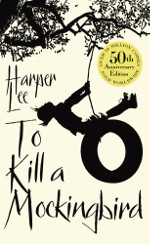
It’s strange picking up a book that’s such a classic you feel as if you already pretty much know the story — then you realise as you go along that you actually don’t know it at all, that behind the familiar names and oft-quoted passages, there’s a lot more to it than you’d always assumed. To Kill a Mockingbird is about race, of course, but it’s also about childhood, family relationships, fear, hypocrisy, demonisation and, perhaps most surprising to me, gender. Maybe everyone else knew this already, but Scout Finch is a fantastic example of a character who doesn’t fit where society expects her to, perhaps because her father has done his best to shield her from the corrupting influence of people’s stupid expectations, and … oh no. I think I’m reverting to my university self. I can’t help it, this book is just so crammed with insight. Not to mention it’s still absurdly, crushingly, shamefully relevant to the modern world. I know my endorsement means nothing at this point, but regardless: read read read.

And read loads more of my rambly book paragraphs over on the Books I’ve Read page!
January-May 2015 reading

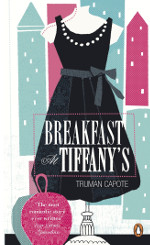
150-BreakfastAtTiffanys Breakfast at Tiffany’s by Truman Capote

An interesting and gorgeously written study of a young woman with a childlike wandering spirit and a prodigious talent for making people fall in love with her, two attributes guaranteed to wreak havoc in the hearts of the men she encounters. Even if readerly distance allows us to see a few more of Holly’s flaws than these men tend to acknowledge, it is hard not to miss her a little bit after the story has come to its quietly beautiful end. Added bonus: the book is slightly less racist than the film. Added bonus number two: most editions include three short stories at the end, which are worth sticking around for, particularly A Christmas Memory.

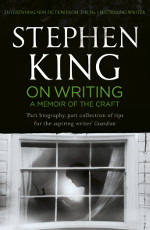
150-OnWriting On Writing by Stephen King

I was rather confused about what this book was before picking it up, so perhaps I can clarify: it starts out with memoirs recounting interesting incidents from Stephen King’s life – fragmented, because as he states he didn’t want to include the boring bits. (It wouldn’t be King without something horrific, and in this section the horror mostly comes from various medical procedures he has undergone – if you’re squeamish about needles, you may want to skip the chapter about his visit to the ear doctor.) Then comes a separate, somewhat larger section where he gives writing advice, on for example how to use adverbs (preferably extremely sparingly, lol), how to develop the habit of writing every day, and where in the writing process you should start thinking about theme. It’s mostly subjective stuff, but it’s certainly interesting to hear opinions from someone so successful.

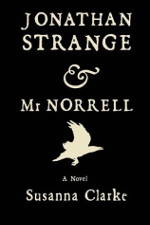
150-JonathanStrange Jonathan Strange & Mr Norrell by Susanna Clarke

A wonderful, sprawling story about a bunch of English gentlemen who call themselves magicians, in an alternate history where magic used to exist but seems to have faded almost entirely from human knowledge. In the fashion of a nineteenth-century novel it moves quite slowly, and is a massive doorstop of a book, but the sort of doorstop you can get lost in; the footnotes and historical details make the most unlikely things feel chillingly authentic. There were points when I felt as though I was reading a new Harry Potter, which is a compliment I can’t extend to many books. There’s something about the combination of vividly drawn characters, the slow reveal of a mysterious magical world, and the sheer boundless imagination and unpredictability of the story, that fills me with inexpressible glee. Probably my favourite book I’ve read for at least a couple of years.

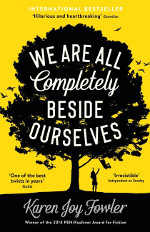
150-WeAreAllCompletelyBesideOurselves We Are All Completely Beside Ourselves by Karen Joy Fowler

This book was not remotely what I expected. Yes, I expected (from what little I’d heard about it) that it would be about the amusing peculiarities of a family, and it was indeed about that. But, as the narrator points out, everyone may think their family is weird – but hers is that little bit weirder. The reveal of this is one of the bigger “wait, WHAT?!” moments I’ve experienced lately – so if you can go into the book knowing as little as I did, I’d recommend it. It’s fiercely intelligent, witty and philosophical, but also unflinchingly dark and angry. If I have a criticism it’s that the ending seems to come out of nowhere, but I can forgive it that, because overall it doesn’t take the easy way out on the moral dilemmas it raises.

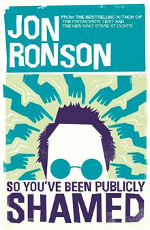
150-SoYouveBeenPubliclyShamed So You’ve Been Publicly Shamed by Jon Ronson

This book was both aggravating and reassuring at the same time. Aggravating because it contains so many examples of online mobs being vicious and disgusting, individual people being petty and unreasonable, and the tabloid press being their usual despicable selves. But at the same time, Jon Ronson’s tone reassured me that I’m not alone in finding public shaming and bullying, even of people who “deserve” it, deeply unpalatable. Numerous times I’ve had to take a break from the internet or unfollow people on Twitter because I was finding myself more annoyed by people whose side I thought I was on than by the transgressors they were attacking. This book at least makes me feel like this isn’t some failure on my part: perhaps I shouldn’t strive to be more blind to my own side’s flaws, more prone to tweeting out acerbic put-downs and less empathetic to other points of view.

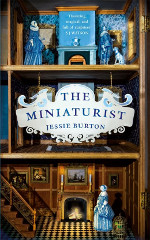
150-TheMiniaturist The Miniaturist by Jessie Burton

This book took a while to grab me. At first it has definite shades of Rebecca (one of my favourite books), as the protagonist Nella arrives at the Amsterdam home of her new husband only to find an unsettling house filled with secrets and whispering characters. But it takes a definite turn about a third of the way through, and becomes something else. I suspect it is an angry book, since it contains things the author probably wouldn’t have written about if she weren’t angry, and that made me warm to it a lot more towards the end. It is lovingly crafted and melancholy and has a rather distinctive and interesting style, albeit one that tripped me up for a couple of chapters before I got into the flow of it. (Note: it may be worth mentioning that the Kindle version also has an unfortunate abundance of typos.)

Update: book release, RDAC and website stuff!

Whew! For once, things are going on in my life. Some of them are quite big, assuming you’re me!
The War of UndoingI just released my debut novel!!! It’s called The War of Undoing, but it has previously been referred to on this blog as Project Snails – the same Project Snails that I’ve been working on in one form or another for over half my life. So, as you can imagine, this is a big deal for me. I don’t feel as scared as I expected, but that may be because I know it’ll be ages before anyone I don’t know finds it. At the moment, it’s just nice to have the book definitively finished, and to get some nice messages from people I haven’t spoken to in a while.
Quick sales pitch, in case you’re interested: The War of Undoing is a big juicy fantasy novel set in Kyland, a continent on a world called the Sphere. It’s the first in a series called Kyland Falls. You can learn more about it and read a sample on the My Books page, and you can buy it as a Kindle book or paperback on Amazon, or in various other digital formats at Smashwords! (More retailers coming soon.)

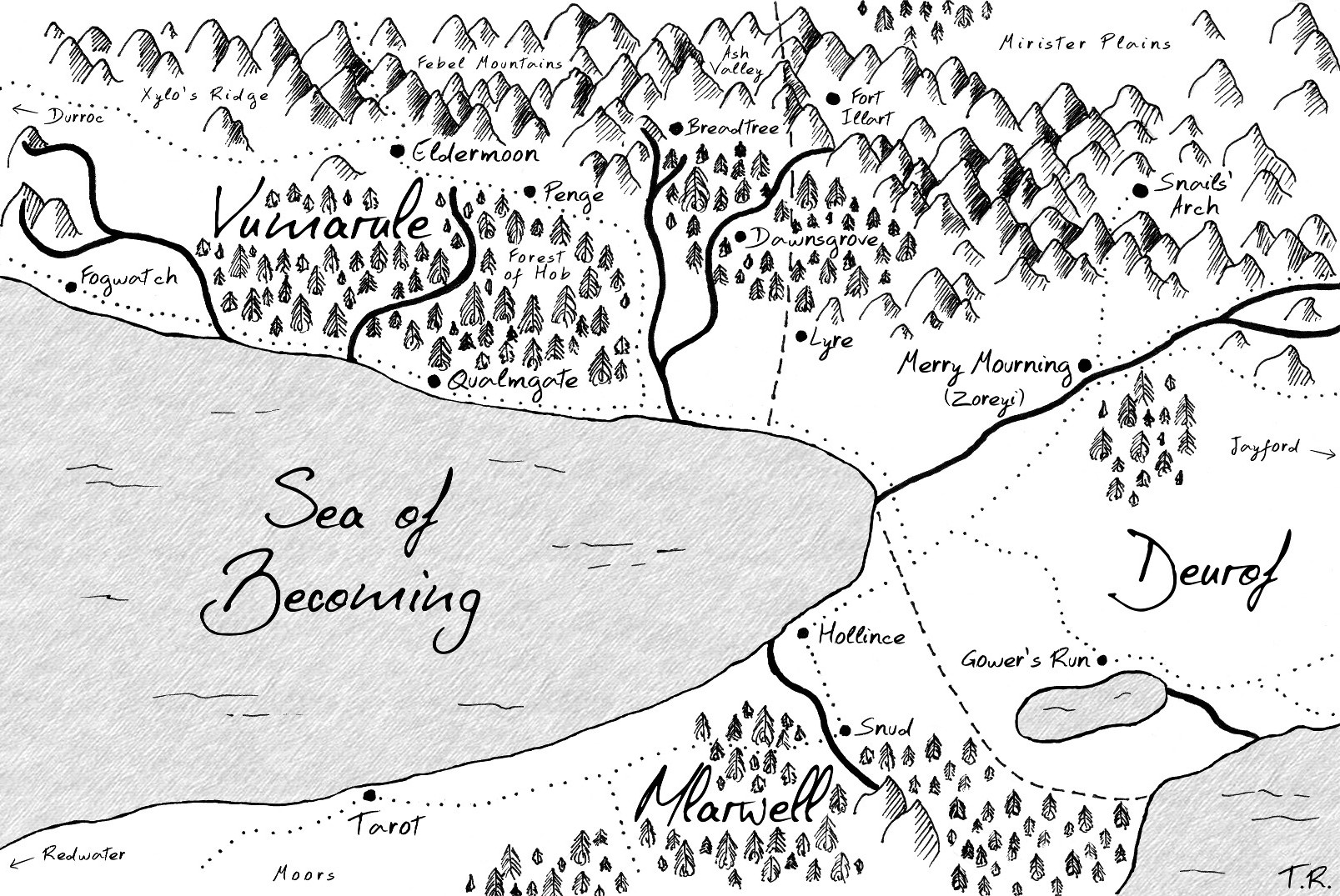
TWOU map

My podcast Rainy Day Adventure Club is back!!! We’re two episodes into adventure four now, and it may be my favourite adventure so far. It’s certainly the one I looked forward to the most, as it has a delightfully silly recurring puzzle involving an ancient gnomish language. It’s the sort of idea that only makes sense in the context of RDAC’s very specific format, so I’m pleased to put it out there for a statistically insignificant portion of the world to see. If you still don’t know what RDAC is, you can find out more about it by going to the website or just diving in and listening to some episodes. It’ll all make sense … sort of.

This website has changed!!! For a start, I’ve updated the info on The War of Undoing to reflect the mind-boggling fact that it’s actually out. But also I’ve moved this blog here from its old home on wordpress.com. (There is still a copy of it there, with all the old posts, but I won’t be updating it any more.) Don’t worry, the content will no doubt be the same: infrequent posts claiming I’m going to start posting more frequently, mixed in with even more infrequent posts about creative stuff I’ve been doing, and slightly more frequent posts about complete nonsense.

I bought some Futurama DVDs off eBay!!! And I’ve worked out that the sales of my book from today and yesterday will cover the cost of them! So thanks, everyone who’s bought it so far. Know that I am spending your money wisely.

Late 2014 – early 2015 reading

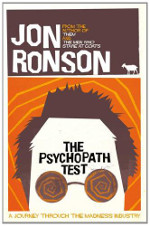
150-ThePsychopathTest The Psychopath Test by Jon Ronson

Like Them, The Psychopath Test is the sort of addictive book I tend to blaze through in a couple of days, its unchallenging language expressing some deeply disturbing ideas. In this case, the idea that psychopaths live among us, sowing seeds of chaos throughout society, but they can be weeded out by means of a series of questions. And alongside this, the equally disturbing idea that this test can be misused in order to make almost anyone seem like a psychopath. There is a touch of the counter-narrative that inevitably seems to crop up in every book like this – “omigosh, what if I’M the psychopath, trying to find psychopaths everywhere?!” – but Ronson doesn’t dwell on it too much. Look out for: the chapter about lack of empathy in the world of reality TV, which somehow manages to be more disgusting than all the stuff about murderers. Good job, guys.

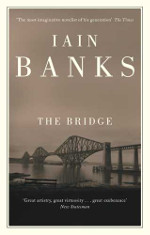
150-TheBridge The Bridge by Iain Banks

I’m not a particular fan of using metaphor in place of plot, but my main problem is when narratives turn that way only at the end. I don’t mind when novels are open about their metaphorical intentions from the outset, and when they justify it by, for example, setting the metaphorical stuff inside a character’s mind. When a skilled author (and Iain Banks most certainly was that) takes the risk of going far enough down the rabbit hole of weird interlocking symbolism, the result can be quite thrilling and rewarding – a Cloud Atlas style puzzle box to toy with at your leisure. The Bridge is a bit like a cross between Life on Mars and Brazil, a journey into a complicated and unsettling world of steam power and bureaucracy where it’s not always clear what’s a dream – and what’s a dream within a dream. Even if the way it all fits together confuzzles you, there are enough treats along the way – the cleverly confounding world of the bridge, the hilarious barbarian bits, the ever-lively descriptive style – to make this a journey worth taking.

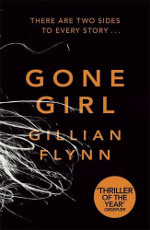
150-GoneGirl Gone Girl by Gillian Flynn

It all begins, with pleasing swiftness, when a woman goes missing and her husband gets caught up in the ensuing media circus. That’s about all I can say without spoiling Gone Girl. The story takes many twists and turns – the dynamics seem to change almost every chapter – yet it never loses sight of what it’s about: two fascinating, dark, well-drawn characters. It also delves rather intelligently into the ways we pretend, how we try to shape our behaviour to fit with other people’s expectations, and some of the destructive consequences this can have. I found it particularly interesting having just read The Psychopath Test, but it split my book club right down the middle, between those of us who found it a brilliant, addictive page-turner and those who found it so boring they could barely finish it. Never have I been so baffled by people’s reactions to a book, so … be aware that you might hate it, I guess. If you hate awesome things.

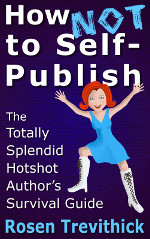
150-HowNotToSelfPublish How NOT to Self-Publish by Rosen Trevithick

As I am gearing up to self-publish my novel, I thought I’d better try to learn a bit about the self-publishing world. Despite the fact that this is not the most serious book on the subject – or the second most serious, or, I would imagine, anywhere in the top hundred most serious – I feel as though it’s given me more of a sense of what to expect than any sombre statistic-filled handbook ever could. The absurd scenarios within capture the vivid and often unhealthy emotions that come with exposing your work to the cruel world of readers, critics, obsessive fans and indifferent family members. The fact that Rosen Trevithick is willing to admit some of these emotions and laugh at them makes me breathe a sigh of relief – perhaps worrying about those things does not make me too immature to cope with the business of being a writer. Perhaps I could fit in with all the other indie authors putting a brave face on their seething jealousies and insecurities. Phew.

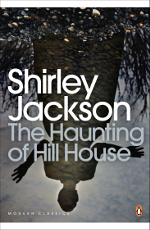
150-TheHauntingOfHillHouse The Haunting of Hill House by Shirley Jackson

The opening of Hill House is strong – we get to bask in some quite beautiful language, get to know (and in my case like) Eleanor and her flights of fancy, and are introduced to a promisingly crooked house that seems to ooze potential for horror. But I was a little disappointed from there on. It’s not that I expected modern pacing and in-your-face nightmarish horror a la The Conjuring. I expected subtlety, but not subtlety so subtle that towards the end I didn’t understand the characters’ motivations at all, or much care what happened to them. Perhaps I need to read this book again with my subtlety dial turned up, as other people’s reactions to it make me want to get more from it than I did. It’s a shame, but I guess horror is an incurably subjective genre – it scares you or it doesn’t.

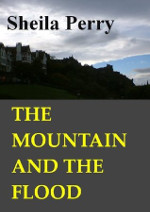
150-TheMountainAndTheFlood The Mountain and the Flood by Sheila Perry

Another novel by my mum, published under her real name this time! It’s set in a dystopian future version of Scotland which achieved independence from the UK then went a bit evil and began cracking down on citizens of English birth. (Guess which side my mum was on in the independence debate?) In the midst of this, a half-English, half-Scottish family living in Edinburgh struggles to remain together, fighting first faceless bureaucracy and later actual people with actual faces. Oh, and while all this is going on, an apocalyptic storm is brewing that could flood most of Scotland. To do the indie book pitch thing: it’s Nineteen Eighty-Four meets The Day After Tomorrow meets Cat’s Cradle! It’s also very entertaining, even the bits I disagree with politically – which, in any case, tend to be superficial things rather than core philosophical tenets.

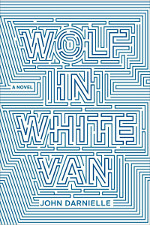
150-WolfInWhiteVan Wolf in White Van by John Darnielle

Y’know, another one of those stories about a disfigured boy who runs a play-by-mail choose-your-own-adventure type game called Trace Italian. Wolf in White Van is in that very specific subgenre (if you can call it that) of books which tell their stories in a non-linear way, and which dance teasingly around a central event which took place a while ago but which we don’t really understand until quite late on. (The God of Small Things is another example that jumps to mind.) It’s the sort of book whose implied insidious hidden messages you could probably spend weeks trying to decode if the mood took you. Even skimming it a second time greatly enhanced my appreciation for its subtly poetic language and intricate thematic explorations.

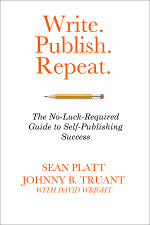
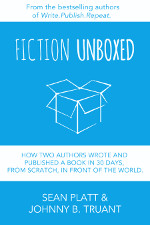
Write. Publish. Repeat. Fiction Unboxed Write. Publish. Repeat. and Fiction Unboxed by Sean Platt and Johnny B. Truant

More insight into the self-publishing world, written by some intimidatingly prolific self-publishing authors. The first of these books gave me the kick I needed to start really taking writing seriously as a career, and think about realistic ways to make money from it, as opposed to the vanishingly faint hope that my first book will instantly catapult me to success. The second details the process of writing a 100,000 word Young Adult book in the space of a month (whaaa), in a most inspiring and instructive way.

July-August 2014 reading

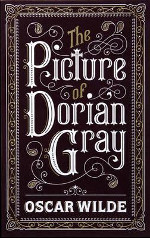
The Picture of Dorian Gray The Picture of Dorian Gray by Oscar Wilde

Brilliant, simple, original ideas are hard to come by. Oscar Wilde had one of them, and the result is The Picture of Dorian Gray, a tragic exploration of a consequence-free life. Conspicuously absent are details about what Dorian actually DOES when he is supposedly indulging in wild excess and vice – I’m guessing these were too riskily risqué for a Victorian readership. As such, it is hard for us to tell exactly whose side we should be on as a modern audience, though Lord Henry’s cruel witticisms which sow the seeds of amorality in young Dorian’s mind can seem less seductive now than they probably did then. Also off-putting are the book’s treatment of class, and certain drawn-out descriptions of faraway things that have little bearing on the story. All in all, though, the book is still interesting for its iconic and genuinely unsettling imagery, its endless paradoxical soundbites and the sort of ending that makes you go “Now, that’s an ending!” (Also, for a bit of context it is well worth reading about Wilde’s life, particularly his trial, to which this book now seems incredibly relevant.)

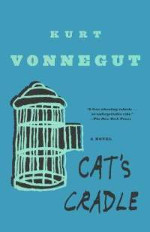
Cat's Cradle Cat’s Cradle by Kurt Vonnegut

You never quite know what you’re getting into with Vonnegut. Cat’s Cradle plays with a bafflingly diverse array of ingredients which interact in chaotic ways to bring about a most unconventional apocalypse. These ingredients include: the oddball children of the mysterious, deceased co-inventor of the atom bomb, a large quantity of new and useful philosophical terms (courtesy of Bokononism, a self-admittedly made-up religion), several fragments of ice-nine (a new kind of water that teaches any other water it touches to solidify into a stubbornly unusable block) and, last but not least, the tropical island nation of San Lorenzo. It reminds me a little of H G Wells in its mingling of dark visions of the future with musings on humanity which make such futures appear worryingly inevitable. I know this is one of Vonnegut’s best-regarded books, but for me it hasn’t yet clicked together into as satisfying a whole as, to pick an unfairly brilliant example, Slaughterhouse-Five. But there’s so much going on, thematically and philosophically, that I already have the itch to revisit it in the not-too-apocalyptically-distant future.

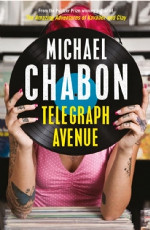
Telegraph Avenue Telegraph Avenue by Michael Chabon

Telegraph Avenue interweaves the stories of two families living in Oakland, California, including two men whose record shop is on the brink of going out of business, two disillusioned midwives, two teenage boys experimenting with their sexuality, and an ageing Blaxploitation star trying to escape his criminal past and revive his movie career. It’s nice to read a book that deals with interracial friendship without either glossing over the cultural differences or, worse, making them seem like a huge deal, something deep and unconquerable simmering under the surface of all human nature. Generally the main characters are more worried that they may be racist than actually racist, which feels fundamentally reassuring in a weird way. This is indicative of the book’s restrained tone – we don’t see much in the way of epic confrontations, nervous breakdowns, melodramatic monologuing and so on. Most of the book could be a soap opera if it weren’t so funnily and interestingly written, so sunny and pleasant and filled with rich, colourful language. If you can forgive a few cartoonish moments and a few more that a cynic would see as excuses for Chabon to show off his writing skills, this is a most enjoyable and worthwhile read.

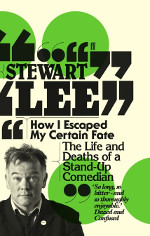
How I Escaped My Certain Fate How I Escaped My Certain Fate by Stewart Lee

My two favourite stand-up comedians, Stewart Lee and Ross Noble, both make me feel somewhat cheated by other stand-ups. Ross Noble because the vast majority of his material is completely improvised, and Stewart Lee because he devastatingly dismantles a lot of the clichés other comedians use to get cheap laughs. This book continues that work, with accounts of his frustrating journey to get his stand-up career back without sacrificing integrity. There are also annotated transcripts of three of his shows, which really make you appreciate the level of thought that goes into his routines, and the subtle ways he manipulates his audiences. As in his shows, it is not always clear here where the real Stewart Lee ends and his stand-up character begins. He is one of those mildly intimidating people with such strong convictions about what art and culture should be that I find myself wishing I could be so sure about things, pondering whether I should start pretending not to like the things he doesn’t like in order to seem more cultured. I still like musical theatre though.

The Road The Road by Cormac McCarthy

One of the bleaker post-apocalypses I’ve visited. No bands of sassy, leather-clad, punky-haired, gun-toting survivors banding together and forging unlikely alliances here. And that’s not all McCarthy has jettisoned: there is no cautionary narrative about the events leading up to the apocalypse; even speech marks and character names are done away with, which lends the proceedings an odd, lonely, distant flavour. Conversations are stark, brief and clipped, occasionally veering towards the dark absurdity of Beckett’s Endgame. I suppose there is some of the Slaughterhouse-Five sense of there being no plots left to tell in this sort of insane situation – no heroes, no victories to be achieved, very little hope of rebuilding society. But The Road‘s protagonists at least have an iron will to survive, even if it’s not always clear why they would want to. It is the small details of their struggle which are the most powerful, and which truly make us ache for them to stumble upon the brighter world we feel they must surely have earned by now.

The Elements of Eloquence The Elements of Eloquence by Mark Forsyth

A fantastic, inspiring and entertaining glossary of rhetorical techniques to make language sing – from alliteration to zeugma (though not in that order). I wish I had read this book years ago, as I now feel I could apply at least a few of the techniques it describes to my own writing – though there are some, as Forsyth notes, that come naturally to people without them even noticing. Particularly impressive is how the author manages to construct a chain of rhetorical examples, one leading naturally to the other all the way through the book – I can only imagine this involved a maddeningly complicated flowchart of some kind. But it pays off, making the book extremely readable, and if you’re me you will set aside all worldly responsibilities to blaze through it. I will definitely go back to The Elements of Eloquence, and may even pick up a paper copy for easier reference. (Also I can’t believe I never noticed the thing about proper adjective order before! What a little curious thing!)

Neverwhere Neverwhere by Neil Gaiman

In Neverwhere, Neil Gaiman invents a world under London which bears the same sort of resemblance to the actual city that the London Underground map does – twisted into different shapes, abstracted, making unexpectedly literal sense of some of the odder station names on the tube network. This is a world of rats and labyrinthine sewer tunnels and people in ragged clothes, scraping out a living in their own vaguely supernatural world, unseen by people above. The story rolls along merrily, sweeping likeably vague and vaguely likeable protagonist Richard Mayhew along with it. We rarely return to the same place twice, as Gaiman seems determined to introduce us to as many surreal sights as possible in the time he has. He is never overly concerned with explaining how things came to be or the rules that govern magic in his world, if indeed there are any rules other than “it has to be weird and cool”. I alternate between finding this enthralling and a little hard to swallow, but overall I’d have had to be quite devoted to depriving myself of fun, to avoid falling under Neverwhere‘s spell.

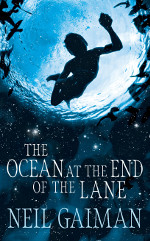
The Ocean at the End of the Lane The Ocean at the End of the Lane by Neil Gaiman

This connected with me more than the other Neil Gaiman books I’ve read. This may be because there are specific details (not the really dark stuff, thankfully) that matched so precisely with my own experience that they reached through the page (well, Kindle screen, to be less poetic) and put me right there in the shoes of the seven-year-old protagonist. As well as featuring a classic Gaiman world-within-our-world (or is our world within their world?), The Ocean at the End of the Lane is beautifully evocative of childhood. There is a powerful sense of adulthood as mysterious and full of secret knowledge, which is then dwarfed by a similar but much grander sense about the hidden world the main character stumbles into, which just goes to show that growing up isn’t all that children think it is. You’ll notice I’ve said very little about the actual storyline. That’s because this is one of those stories that feels almost destined to become an iconic and canonical work of fantasy, and if you have the chance to go into it without knowing anything, you probably should take it.

April-June 2014 reading

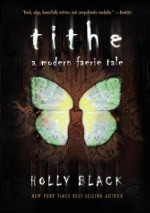
Tithe Tithe by Holly Black

A modern faerie tale, in which misfit teenager Kaye moves back to the place she grew up and rediscovers the realm of faeries she used to play with. But it all seems a lot darker now, as conflict rages between the Seelie and Unseelie Courts and the solitary fey caught in the middle. If it sounds like Among Others, I suppose it is a bit, though this is more standard Young Adult fare, complete with a love story I’m probably not qualified to comment on so I’ll just shut up. Despite my love of fantasy, when it is mixed into the real world I often find myself enjoying the real world stuff more. Tithe is no exception – I like Kaye’s world before all the weird stuff kicks off, and said weird stuff is imaginative and vividly drawn, but I was never quite sold on the tricky ground where they meet. I suppose if characters always reacted with appropriate levels of surprise and bewilderment, a lot of fantasy would just be about people quivering and wailing in corners. Somebody needs to write that book some day.

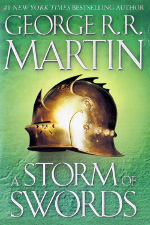
A Storm of Swords A Storm of Swords by George R. R. Martin

Martin’s intimidatingly ambitious fantasy series only grows more intimidatingly ambitious in its third entry. If A Clash of Kings felt a little too much like several related but mostly separate narratives, A Storm of Swords weaves many of them back together in often unexpected ways. I enjoyed the first two books, but this one feels as if it’s firing on all cylinders, burning the fuel provided by the many diverse elements introduced in books one and two. Or perhaps it was me who changed, who finally realised I knew enough about Martin’s world to get by, that I didn’t need to keep track of the names and sigils of all the minor houses to appreciate the story. Either way, this is my favourite so far. Despite being big enough to justify splitting into two volumes, Swords feels tight, almost every chapter acting like a satisfying short story, beginning and ending in exactly the right places. There are too many highlights to mention; the latter half especially is a rollercoaster, crammed with an almost absurd number of twists and turns, not to mention an impressive body count.

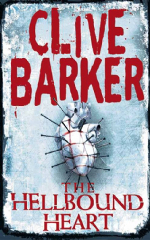
The Hellbound Heart The Hellbound Heart by Clive Barker

Similar to the few Lovecraft stories I’ve read, The Hellbound Heart is content to reveal only slivers of its distinctly unsettling mythology. Sinister, leering forces beyond our understanding lurk just out of sight behind the walls of the world, waiting for any excuse to drag victims off to their realm of disfigurement and myriad kinky torments/pleasures. There are nuggets of gold in the story: the unseen realm is described with enough vagueness to give the reader’s imagination something to do; Barker makes a clever and creepy use of brackets which I don’t think I’ve ever seen before but which I am sorely tempted to steal; and the ending is quite darkly beautiful if not entirely earned. Overall, though, I don’t know that I would recommend The Hellbound Heart. From plot to character to style, it all feels rather slight, like a short story stretched out to the length of a short novel. But hey, at least it’s short, and inventive enough that perhaps you should read it anyway if you’re into oddness.

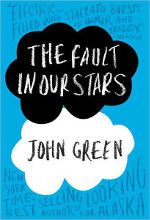
The Fault in Our Stars The Fault in Our Stars by John Green

Hey look! I read something almost timely! See, I’m still down with the kids! The Fault in Our Stars is a book about love and cancer and books. Primarily it is a romance between teenagers, and it is one of the best of those I have ever read, in that at no point did it make me want to hurl myself through a window. This is probably down to the simple fact that Hazel and Augustus have interesting and intelligent thoughts, not just about their own painfully evident mortality but about the universe in general. John Green (who I’ve become mildly obsessed with/envious of after realising he’s the same John Green who does this) skillfully weaves together cynicism about the tropes of simplistically sentimental ‘cancer books’ with philosophy and a great deal of wisdom about everyday relationships. It seemed inevitable that this book would try to make me cry towards the end, and while I somehow (just) managed to resist, it still made me think more than anything I’ve read in a while, and for that reason alone I’d say it is an exemplary Young Adult novel.

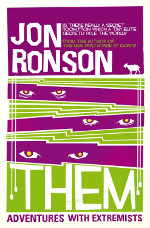
Them Them by Jon Ronson

Jon Ronson is not one to let feelings of social awkwardness (or the occasional mild fear for his life) get in the way of an intriguing human story. In Them he documents his time spent with various religious extremists, gun enthusiasts, conspiracy theorists and other people generally demonised by mainstream culture. In the process, like many a good author, he demonstrates why “evil” might just be the least helpful word in the English language. We bear witness to such disarming juxtapositions as an Islamic fundamentalist watching The Lion King with his baby daughter, and a branch of the Ku Klux Klan nit-picking over how best to burn a cross. Segments are short and snappy and easy to dip into, but as the narrative progresses it builds genuine intrigue, and you might end up reading big chunks all at once just to find out what head-shakingly strange thing happened next.

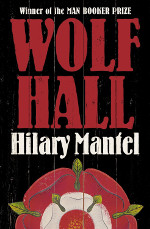
Wolf Hall Wolf Hall by Hilary Mantel

I haven’t read much historical fiction, which is both a symptom and a cause of my comprehensive ignorance of history. But this sort of vicious circle can only be broken by fumbling around in the dark for a while, and that’s just what I did throughout a lot of Wolf Hall. Much of the story deals with the technicalities of obtaining a divorce for King Henry VIII of England, but the figures involved (including cunning protagonist Thomas Cromwell, jealous femme fatale Anne Boleyn, and the fascinatingly unpleasant utopian dreamer and torture enthusiast Thomas More) make this a good deal more interesting than it sounds. If you can get over the daunting size of the book, the initially confusing use of pronouns in place of the main character’s name, and the fact that about 50% of the characters are named Thomas, Wolf Hall gets pretty intriguing, and some of the descriptions alone are worth the price of admission. It may even be a good way to begin to understand British history, for people who like their knowledge packaged in a satisfying narrative form.

Late 2013 – early 2014 reading

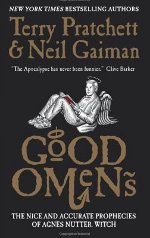
150-GoodOmens Good Omens by Terry Pratchett and Neil Gaiman

An apocalyptic tale in which the forces of Heaven and Hell are portrayed as world-weary, vaguely incompetent bureaucrats endlessly pushed around and manipulated by those up(and down)stairs. This sets the stage for a witty play involving frequent meetings between the mythological (represented by said bureaucrats and four horsepersons of the apocalypse, among others) and the mundane (represented by the inhabitants of the almost-too-wholesome English village of Lower Tadfield). Yeah, this book is definitely very Gaiman and Verry Pratchett, though in terms of style it feels more Pratchett to me – so densely packed with humourous insight, pleasing turns of phrase and clever images that as a writer I go into a state of denial to make myself feel better, thinking “okay, but it can’t REALLY be this well written”, even though it blatantly is.

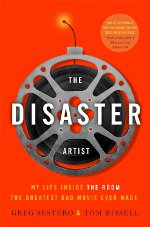
150-TheDisasterArtist The Disaster Artist by Greg Sestero and Tom Bissell

This book documents the making of Tommy Wiseau’s The Room, which is up there with Troll 2 in the “best worst movie” leagues. The unglamorous portrayal of small-time show business is interesting, but it is Tommy’s combination of eccentricity, passion, anger and vulnerability that makes this account so memorable (if you’ve ever acted in a weird and emotionally manipulative way, some of his lower moments may feel uncomfortably familiar). Sometimes I think any work of this type – be it documentary or memoir-type thing – is just an excuse to talk about people for a good long while, the specific subject acting as a framing device which sheds a lot of its importance once we begin to get to know the fascinating characters involved. So even if you haven’t seen The Room, this book deserves to be read by anyone interested in people – and if you aren’t, why are you reading at all?

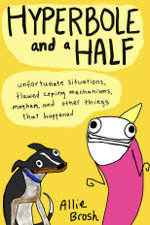
150-HyperboleAndAHalf Hyperbole and a Half by Allie Brosh

Really, if you want to know whether you should buy this book or not, the best test is to go and read the blog it’s based on. If you find yourself charmed by Allie Brosh’s willingness to look inwards, seek out all the most unflattering elements of her personality like an emotional investigative journalist, and report back with humour, bright colours and a rare, even inspirational level of honesty – buy this book! If you don’t, don’t – but just know that I like you a little less now. You might recognise some elements of Hyperbole and a Half that have become memes (“CLEAN ALL THE THINGS!”), but even those that haven’t are wonderfully quotable. For example: “Are you going into the kitchen? Cool. Go fuck yourself” is a phrase that will stick with me, at least reminding me that I’m not alone while I beat myself up over nothing.

150-Watchmen Watchmen by Alan Moore and Dave Gibbons

I need to read Watchmen again, because for the moment I have nothing resembling insight, only superlatives to lavish upon it. Actually scratch that – I’m not a proper reviewer, I can gush if I want to. The art is stunning, even overwhelming at times, and considering its only path of entry to your brain is through your eyes, it is amazingly effective at conveying seas of noise and long-drawn-out eerie silences. The overall effect of the whole thing is exhausting. Perhaps that’s just down to my inexperience with comic books, or perhaps the world it presents is just a little too frighteningly believable: a world which hovers on the brink of nuclear war while the heroes who were once seen to protect it can only shuffle around New York City reminiscing about the good old days and mourning their lost youth and reputations. Hmm, I may have made it sound dull there, but it absolutely isn’t – it’s astonishing, even or perhaps especially to a superhero sceptic such as myself.

150-AClashOfKings A Clash of Kings by George R. R. Martin

The story told in this volume is more complex and subtle than that in A Game of Thrones, and it feels to me that it makes more sense as a novel than as a season of TV. This time around, the viewpoint characters are kept apart to a large extent, placing more importance on an almost impossibly large supporting cast who are more easily developed on the page than on the screen. It moves slowly at first, like the creaking gears of a massive machine, but it is in this book that the sheer scale of both the world and the story become clear: new locations are revealed, all described in beautiful detail; Shakespearean characters hatch devious plots, betray each other and desperately thrash around to escape the impossible situations they end up in; bloody battles are fought; old dark powers continue their slow, spine-tingling return to Westeros. I can’t even begin to imagine how Martin mapped all this out, but presumably he’s keeping a Post-it note shop in business somewhere.

Breakfast of Champions Breakfast of Champions by Kurt Vonnegut

To a greater extent than the other Vonneguts I’ve read, Breakfast of Champions reads less like a novel and more like a guide to the human race written by a bemused, witty and easily distracted alien. It starts strong, with a sarcastic dismantling of the myths surrounding America, and goes on to cover such ground as free will, racism, the futility of all life, and ultimately just what the hell the Creator of the Universe is playing at. Despite, or maybe because of the fact that its actual capital-P ‘Plot’ is so deeply buried within a labyrinth of tangents that it can barely be located at all, this book made me understand certain things about Vonnegut’s style for the first time. At one particularly brilliant point, he breaks the fourth wall and explains why he writes the way he does; on several other occasions I laughed out loud at the gleeful immaturity with which he takes a sledgehammer to the sort of rules they teach you in creative writing classes.

Who is this guy?

A week ago I began working on a new book. It’s a collection of three short stories set in the same world as Project Snails, the massive fantasy novel I keep going on about (which is nearly finished but I’m letting it lie fallow to give myself a bit of perspective before I do my final round of edits and start trying to shove it down publishers’ throats). For the purposes of this blog I’ll call this new, smaller book Project Bitesize. The stories in it all follow the same character but are reasonably standalone – they have a bit of a noir flavour, and were conceived to be fun, light, fairly simple and relatively quick to write. What could go wrong?

I realised what could go wrong last Monday, the first day I worked on it full time. I had an outline for the first story, but as I began to write I discovered my outline was woefully inadequate. Even in writing the opening scene, which is primarily about setting up a mystery around a secondary character, it became painfully clear that the main character wasn’t pulling his weight. He was doing and saying whatever was necessary to advance the story, but had no particular agenda of his own. Halfway through the scene, I forced him to do something unexpected, in a crude attempt at turning him into a proper character, but in fact that had the opposite effect – he had subverted our expectations, yes, but in a way that made him even less understandable. There was no thread running through his words and actions to help readers, or me, to empathise with him.

At this point I started questioning everything about the project, particularly my own writing ability. How do you create an interesting and believable character? Suddenly I had no idea. I like to think there are at least a few examples in Project Snails, but I never followed any sort of formula to create them – they sort of grew in my head, over the course of many years and countless revisions of their story. When I started I didn’t know who they were – they were just (made up) names, each with a gender, age and arbitrary hair colour attached. From age 11 (I remember this because the youngest of my three main characters was slightly older than me when I began writing him) I spent years fumbling about, improvising a largely incoherent plot, and later abandoned more or less everything about the book aside from four or five characters and the fact that some of them board a ship quite near the beginning. So I was every bit as clueless then, I just didn’t know it. And doubt is certainly nothing new.

What’s thrown me is that it’s been so long since I wrote something completely new (the last major thing being the now dormant webseries Project Chippy back in 2011) that I’d kinda forgotten what to expect. After spending a couple of years writing characters I know inside out I forgot that there are such things as characters I don’t know. And the protagonist of Bitesize turned out to have no discernable personality at all. Why should he? I hadn’t given him any in my plan. I’d thought, maybe subconsciously, “Ah well, this story isn’t so much about him, it’s about the events he gets caught up in, and I’m sure I can write him to be just kind of generically charming and fun to go on a journey with”. How wrong I was.

Eventually I decided I’d have to shift the scene introducing the mystery back, and make the opening more about the main character – like how in A Study in Scarlet, the first couple of chapters are about Watson’s impressions of Holmes, before the titular case is introduced. And adding that scene has helped – I’m beginning to get a vague sense for the character of the main guy, and am enjoying building his tangled relationship with another recurring character, who was not even in the plan a week ago, but who has become absolutely central to the whole thing. I’ll probably work it all out in the end, though I’m coming to accept that the draft I’m writing now may turn out to be more an exercise in character-building than a publishable story.

If you want to take a painfully obvious lesson away from this post, try this one: if you want to write a story and you don’t know what your main character is like … um, you should probably fix that. I dunno. Despite having written a 200,000 word novel that I’m rather proud of, I sometimes feel I’m just learning for the first time what everyone else learned in their first creative writing class at primary school. Or perhaps writers simply have to relearn writing every time they start a new project?

Either way, I’m aiming to finish a draft of the first story by the end of this week, at which point I’ll reflect and decide what to do next, possibly in another blog post. It could be starting the second story, editing the first, going back to the more familiar territory of Snails, or sitting around watching Orange is the New Black and eating a whole bag of Mini Eggs. What mental state will I be in this time next week? Who can say? Never mind characters, sometimes I feel as if I’m the one I really don’t know.